Cooking, but from a scientific perspective
Master the technique, make your own creations
Modalitatea:
Online
Next edition:
October 15, 2024
Ordutegia:
To be determined
Precio:
900 €€
Master the technique, make your own creations
Spain is the cradle of culinary avant-garde, known for innovating techniques, creatively using products, and creating surprising and characterful dishes. Many of the movements that have driven this trend started in the Basque Country, where Basque Culinary Center has been dedicated to collecting and transmitting these innovations through education.
With the help of pioneering educators, we aim to train professionals capable of responding to the changing challenges of the environment. Thanks to a strong scientific vision, we have been able to approach the avant-garde with well-founded and rigorous knowledge, while maintaining creative freedom.
Thus, the Molecular Cooking Course was born. The first Online Tutored Course with a "learning by doing" approach in English, focused on Molecular Cooking within the Gastronomic field. This course has a clear objective: to provide you with the necessary bases and fundamentals to understand how avant-garde products and techniques work.
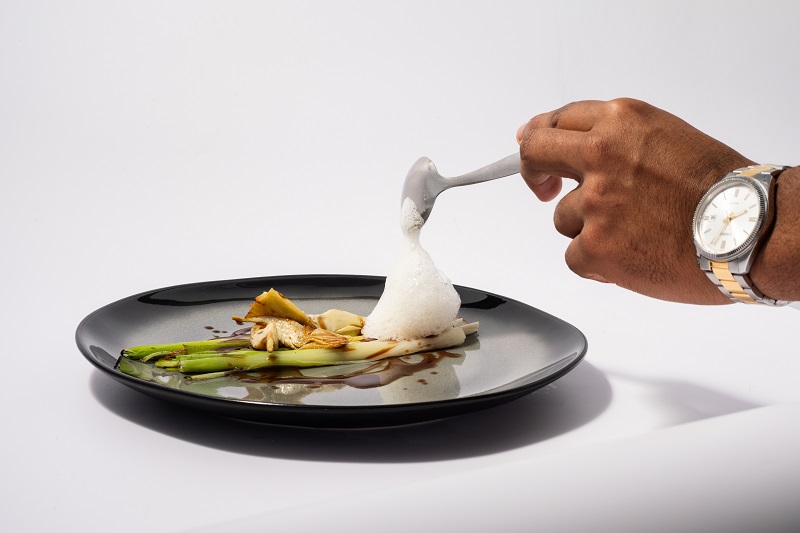
It includes knowledge about gelling agents, thickeners, and emulsifiers. It also covers processes and technologies, both ancestral and contemporary, such as salting, smoking, and nixtamalization. It's not a course to replicate recipes, but to understand the principles of Molecular Cooking to design and execute avant-garde creations.
Who is this Course for?
The Course is aimed at individuals with the following profiles:
Chefs, Chef de Partie, Cooks, Pastry Chefs seeking inspiration and innovation for their culinary creations.
Executive Chefs from hotel chains looking to innovate.
Culinary Teachers interested in enhancing their knowledge and staying updated.
If you do not see yourself reflected in the above profiles and are interested in the Course, do not hesitate to contact us. The course coordination team will review your training and experience and provide you with a response.
Course Objectives
The general objective is to master the use of different avant-garde culinary products to achieve the desired effects when designing a dish. Consequently, the following specific objectives arise:
Identify and understand different products used in contemporary cuisine.
Apply the use of avant-garde products according to the characteristics and parameters sought in the dishes.
Learn techniques using thickeners, emulsifiers, gelling agents, and aerators, as well as the nixtamalization technique.
Design new dishes and creations applied to contemporary cuisine.
Professional Applications
With this course, you can expand and improve your skills, advance in your professionalization, and access profiles of greater responsibility in culinary innovation. Some of the areas or positions of application include:
Creative Cuisine Chef: chef roles in restaurants, hotels, or other gastronomic establishments.
Gastronomic Entrepreneurship: development of proprietary catering businesses such as restaurants, cafeterias, or catering companies.
Culinary Consulting: culinary consulting services for catering businesses such as restaurants.
Program
Module 1: Thickeners
Module 2: Gelling Agents
Module 3: Emulsifiers and Aerators
Module 4: New Avant-Garde Products
Module 5: Nixtamalization
Module 6: Challenge
Module 1: Thickeners
Discover how to create and transform textures
- Introduction
- Origin, History, and Evolution
- Procedures, Usage, and Selection Factors
- Products: Characteristics, Dosage, Use
- Xanthan Gum
- Inulin
- Guar Gum
- Kuzu
- Natural Starches
- Modified Starches
- Applications: Characteristics, Dosage, Use
- Suspension Effect
- Fat Replacement Textures
- Foam
- Puffed Broth
- Tapioca Crisps
- Thickened Cream
Module 2: Gelling Agents
Play with the consistency of your creations
- Introduction
- Origin, History, and Evolution
- Procedures, Usage, and Selection Factors
- Products: Characteristics, Dosage, Use
- Agar Agar
- Iota Carrageenan
- Gellan Gum
- Animal Gelatin
- LM Pectin
- NH Pectin
- Methylcellulose
- Alginate
- Applications: Characteristics, Dosage, Use
- Caviar
- Dairy Gelatin
- Spherification
- Red Wine Compote
- Fruit Glue
- Edible Film
- Coating
- Crunchy Foam
- NH Pectin
- Methylcellulose
- Alginate
Module 3: Emulsifiers and Aerators
Understand the science of binding and aerating
- Introduction
- Origin, History, and Evolution
- Procedures, Usage, and Selection Factors
- Products: Characteristics, Dosage, uUe
- Mono/diglycerides
- Lecithin
- Sucrose Esters
- Applications: Characteristics, Dosage, Use
- Toffee
- Emulsions
- Alcoholic Air
Module 4: New Avant-Garde Products
Explore the frontier of culinary innovation
- Introduction
- Origin, History, and Evolution
- Procedures, Usage, and Selection Factors
- Products: Characteristics, Dosage, Use
- Wheat Dextrin
- Transglutaminase
- Atomized Cocoa Butter
- Applications: Characteristics, Dosage, Use
- Crunchy Tempura
- Puffed Fish Skins
- Coatings
Module 5: Nixtamalization
Handle the technology behind an ancestral process
- Introduction
- Action of Alkaline Media
- Selection Factors
- Alkalis in avant-garde cuisine: Classifications, Characteristics, and Methods of Use
- Sodium Citrate
- Sodium Hydroxide
- Calcium Hydroxide
- Nixtamalization of Starch-Containing Products
- Nixtamalization of Pectin-Containing Products
Module 6: Challenge
Apply your knowledge of techniques and products to create your own avant-garde dishes
Learning Methodology
The Course is delivered using the Learning by Doing methodology, based on the idea that the best way to learn is through practical experience and direct action. Instead of focusing exclusively on theory and passive instruction, this methodology encourages you to acquire knowledge and skills by actively participating in online and practical activities. Some characteristics of the methodology include:
Current and interdisciplinary content that combines Scientific Vision and Applicability.
Audiovisual resources that clearly show step-by-step processes.
Masterclasses and Cooking Demos by expert professors and industry leaders that will be available during the entire academic period
Live classes once a week with BCC professors and collaborators to discuss and delve deeper into the content.
Weekly work planning that is part of the continuous assessment.
Activities and challenges: interactive exercises, tests, assignments, forums, etc., for meaningful learning.
Teachers and Guests
Learn from Industry Experts and an Interdisciplinary Faculty!
You will have the opportunity to learn from accomplished professionals in the field, recognized for their academic, intellectual, and social influence, as well as their impactful contributions. The program features a panel of professors, which may vary with each edition, composed of experienced experts in the field of Culinary Arts and Gastronomic Sciences.
Calendar
Academic Period: october 15 - november 22, 2024
Introduction to the Platform (Module 0): at the beginning of the academic period, there will be an opportunity to familiarize yourself with the course methodology and learning platform.
Closure of the Virtual Classroom: december 23, 2024
Approximate Weekly Commitment: 12 hours
Price and Financing
€3,070
The total cost of the course will be paid as follows: €150 upon submission of the application (fully refundable if not admitted). 40% of the amount, that is, €1,168, upon confirmation of admission, as a reservation fee. The remaining amount, that is, €1,752, two weeks prior to the start of the program.
