Presentation
Gain a comprehensive vision of contemporary cuisine
The Master’s in Advanced Cookery is designed for chefs seeking to consolidate the technical foundations of the profession and take a qualitative leap in their career. Throughout the program you will acquire tools to achieve culinary excellence, expand your management skills and develop a comprehensive vision of contemporary cuisine, where technique, sustainability and leadership come together.
The aim of the Master’s is to train you as a contemporary chef, able to understand and master the technical foundations of cookery; from how products behave to their relationship with technique, managing teams, costs and resources efficiently. You will learn not only to cook, but to lead a section, lead cooks and take on both human and financial management responsibilities, essential aspects of a professional kitchen.
Your learning journey will be guided by a diverse team of expert lecturers covering key areas of Gastronomy: from the kitchen, front-of-house and team and cost management, to culinary chemistry, pastry and gastronomic offer design. During the program you will also have international chefs and leading figures who will share their experience in PRO Seminars, showcookings and masterclasses. Previous editions have featured names such as Aitor Arregi (Elkano), Mario Sandoval, Albert Boronat, Fernando Aréllano, Dabiz Muñoz and Elena Arzak, among others, covering topics from management and creativity to the history and evolution of Basque cuisine.
The experience is enriched with Learning Journeys, educational visits where you can visit restaurants, markets and production centers, understanding gastronomy from its roots. In previous editions, students have explored landmark places such as restaurant Almazen and Restaurante Frontón de Tolosa, as well as the Ordizia Market, the Salt Valley of Añana, wineries and local projects where the full product process is analyzed —from origin to table—, fostering a sustainable and contextual view of cookery.
During the master’s you will also develop real projects at Basque Culinary Center, applying what you have learned in professional settings. You will also have the opportunity to undertake internships in leading national and international restaurants, such as Akelarre, Arrea!, El invernadero (Rodrigo de la Calle), Quique Dacosta or Elkano, among others. These experiences will allow you to join high-level teams and, in most cases, continue working or access positions of responsibility at the end of the program, such as Chef de Partie or Sous Chef in high-end gastronomic restaurants with Michelin stars or in prestigious hotels, such as the Hotel María Cristina.
All of this in San Sebastián, one of the world’s most recognized gastronomic capitals, where gastronomy is lived, eaten and breathed 24 hours a day. An unmatched setting in which to grow as a professional and become part of the new generation of chefs.
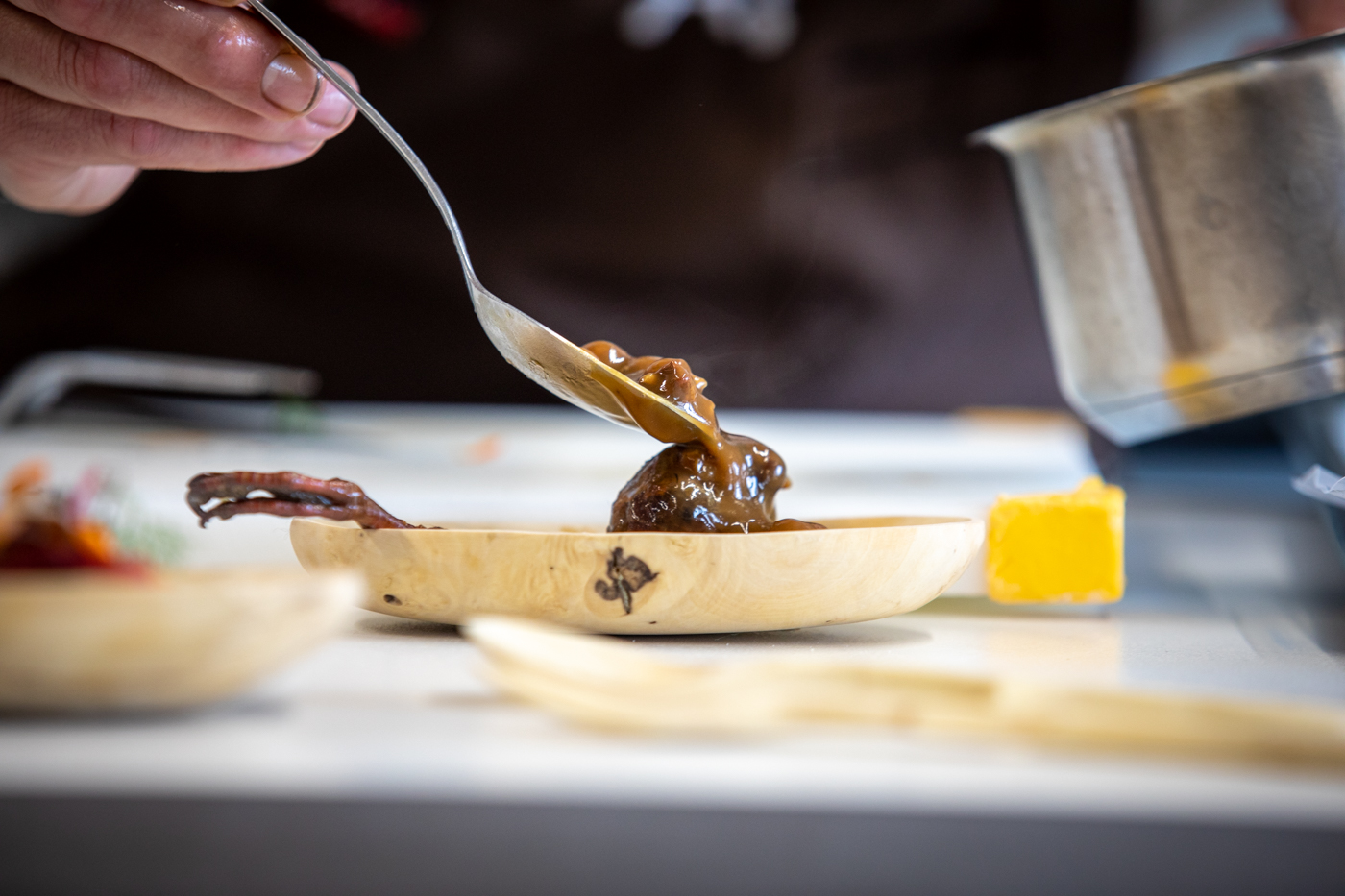
Get inspired with our cookery showcooking:
Why take this master’s
1 - You will acquire advanced training to develop as a contemporary chef, combining technique, a comprehensive vision, sustainability and leadership to take a qualitative leap in your professional career.
2 - You will master classical and current cooking techniques, understanding their physicochemical foundations and adapting them to different culinary styles.
3 - You will learn to apply principles of sustainability, efficient resource management and the design of a gastronomic offer aligned with the new demands of the sector.
4 - You will learn from high-level lecturers and guest chefs, receiving follow-up and applied feedback.
5 - You will train through a practical methodology based on kitchen workshops, showcookings, technical visits and experiential activities in real settings.
6 - You will develop complementary knowledge in key areas such as production management, nutrition, front-of-house, culinary chemistry and teamwork.
7 - You will use state-of-the-art facilities and professional equipment adapted to technical and sensory learning in real gastronomic contexts.
8 - You will take part in Learning Journeys to restaurants, production centers, farms or meat industries, observing good practices directly in the field.
9 - You will build a network of contacts with professionals and leading figures in the sector through seminars, meetings and shared experiences.
10 - You will be part of the Basque Culinary Center ecosystem, which promotes innovation and socio-economic development from gastronomy.
11 - You will live a learning experience in the gastronomic capital of the Basque Country, surrounded by a living culinary culture that will enrich your training and boost your professional development.
Master’s objectives
Develop culinary production techniques and systems that make it possible to approach fundamental preparations.
Recognize the optimal consumption point of raw ingredients and analyze their organoleptic and physicochemical properties and culinary behavior for coherent application in the kitchen.
Identify the most suitable and innovative techniques and processes according to the type of product, its intended use and customer needs.
Manage kitchen resources efficiently and operationally: recipe costing, costs, suppliers, quality control and food safety.
Internalize the values of contemporary cuisine, including sustainability, professional ethics, teamwork and sensitivity to nutritional and allergen-related aspects.
Career opportunities
Upon completing the Master’s, you will be prepared to take on key roles in different areas related to professional cookery, in both creative and operational settings. The training will enable you to access positions of responsibility in high-level kitchens and will open the door to concrete job opportunities in the centers where internships take place, as most students continue working or access new roles at the end of the program.
-
Fine dining
- Chef, Chef de Partie or Sous Chef in prestigious gastronomic restaurants, including high-end gastronomy business models such as Michelin-starred establishments or luxury catering, leading culinary processes and ensuring the quality of the dishes.
-
Hotels and collective catering
- Head chef or second-in-command in hotels, catering services or institutional food service, managing teams and daily operations.
-
Own business
- Culinary entrepreneur, developing and leading your own gastronomic concept with a technical, creative and sustainable approach.
*Career examples: students have accessed roles such as Sous Chef in leading hotels, such as Hotel María Cristina (Donostia - San Sebastián), or as Chefs de Partie in high-end gastronomy business models such as restaurants with one or two Michelin stars.
Study program
- Sensory analysis.
- Nutrition: menu design, nutritional properties of foods, calorie levels, application in a logical menu, allergens.
- History of cuisine: key milestones in the history of cookery, reference chefs and contributions to the evolution of cuisine.
- Food quality and product shelf life.
- Introduction to culinary chemistry.
- Sustainability applied to cookery.
- Food handling, preservation and cooking techniques.
- Food preparation and cleaning techniques. Product reception, storage and control of cleaning processes.
- Pre-preparation techniques for raw foods. Vegetable cuts, pre-preparations of meats, fish and seafood.
- Dehydration techniques, dehydrating fresh products for preservation or as a texture. Crisps, food dehydrators…
- Smoking and salting techniques applied to restaurants. Pipette smoking, direct smoke, wet and dry brines.
- Acid cooking techniques: marinades, ceviches, pickles. Acid theory and application to vegetables, fish and meats.
- Vacuum techniques: different applications. Preservation, impregnations and controlled-temperature cooking of meat, fish and vegetables with or without liquids or fats, confits, stews, long cookings, etc.
- Broths, stocks and consommés. Straining and clarification methods.
- Preparation of stocks and derivatives using different techniques. Clarification with egg, freezing or filtering.
- Basic and derived sauces. Base sauces, emulsified sauces, with or without thickening, cold and hot.
- Water-based cooking techniques; blanching, parboiling, boiling.
- Direct cooking techniques: stews, braises, pot roasts and steam applied to cookery.
- Fat-based cooking techniques: frying, confits, poaching.
- Contemporary techniques and technologies. “On the way to the avant-garde... a small nod to modern cuisine:
- Creative processes. First steps of the creative process.
- New techniques: gels, thickeners, foams and emulsions.
- Liquid nitrogen applied to the restaurant.
- Updated grill techniques. Josper, Basque grill, Kamado.
- Updated fermentation technique as a gastronomic trend.
- Restaurant pastry preparations: sponges, doughs, crunchy elements, caramels, creams, ice creams and sorbets. Restaurant pastry.
- Bakery preparations: methodology, technique and machinery. Restaurant bakery.
- Management of orders, suppliers, warehouse and inventories.
- Kitchen planning and production.
- Production control of restaurant dishes.
- Dish cost control.
- Control of menu costs, warehouse and inventories.
- People management.
- Basic customer service in the restaurant.
Real service with customers in the Faculty restaurant. Comprehensive application of the knowledge acquired.
The program includes the development of a Master’s Final Project in a team, an experience designed to simulate real collaborative environments in the professional field. Group work makes it possible to integrate different perspectives and skills, fostering cooperation, effective communication and the management of shared tasks.
Each team will have the support of an academic tutor, who will facilitate coordination, the methodological approach and the fulfilment of the project objectives. The topic is selected according to the group’s interests and their alignment with the contents of the Master’s.
The project ends with the delivery of a joint report and its practical presentation before an assessment panel, evaluating both the result of the work and the collaboration process and individual contributions within the team.
On this Master’s, internships take place in both national and international companies. You will have the coordinator’s advice to evaluate options and adjust expectations. It is important to bear in mind that internships require a dedication of 3 months full-time. If you have a senior profile, you will be able to validate previous experience.
Who it’s for
The Master’s in Advanced Cookery is designed for professionals looking to strengthen essential culinary techniques and develop competencies in management, creativity and sustainability.
This Master’s is for:
- Graduates and diploma holders in Cookery and Gastronomy: People with vocational training in cookery, higher education in gastronomy, or technical degrees and bachelor’s degrees linked to the culinary field.
- Professionals in the culinary field: Chefs who can demonstrate an equivalent level of knowledge through relevant professional experience (minimum of 1 to 3 years) or non-formal training in culinary techniques and kitchen management.
Don’t see yourself reflected in the points above and are you interested in the Master’s?
If your qualification or experience is not included in the lists and you are interested in this Master’s, contact us so we can assess your case and provide personalized information.
Calendar
| Periods | Dates | Schedule |
|---|---|---|
| Academic period | From 8 February to 9 July 2027 | Monday to Friday, from 8:30 to 13:30 (CEST) |
| Internship period | From 26 July to 26 October 2027 | — |
*If required for academic or organizational reasons, some sessions may be scheduled in the afternoon.
Methodology
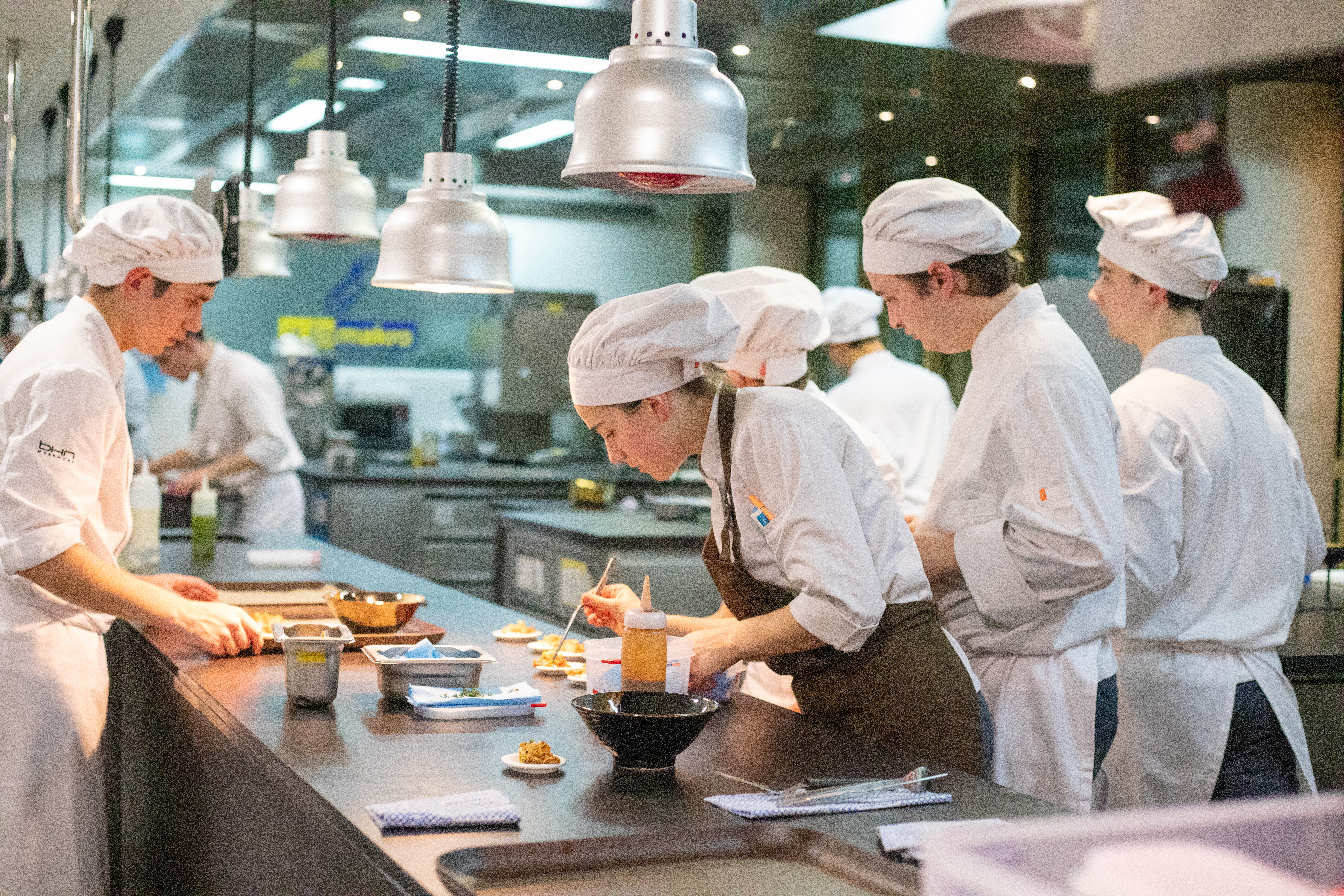
The Master’s in Advanced Cookery is delivered through the Learning by Doing methodology, an approach based on learning by doing. Throughout the program, students practice, experiment and work in teams, turning knowledge into real experience. The structure of the master’s combines theoretical classes with practical sessions and applied projects, organized in progressive phases that allow them to move from technical foundations to professional application in real settings.
Key elements
- Masterclasses and presentations on fundamental culinary techniques and operational management, delivered by experts from the gastronomic field.
- Case studies with debate and strategic analysis, focused on the impact of history, professional ethics and the values of contemporary cuisine, integrating aspects such as allergens, food quality and sustainability.
- Practical challenges and problem-solving dynamics that strengthen skills such as decision-making, leadership in the kitchen, operational planning and culinary innovation.
- Gastronomic activities: tastings, samplings, sensory analysis workshops and sensory experiences focused on the technical-nutritional knowledge of ingredients.
- Masterclasses with leading figures in the sector such as Albert Adrià, Ángel León, Albert Boronat, Mario Sandoval or Toshi Narisawa.
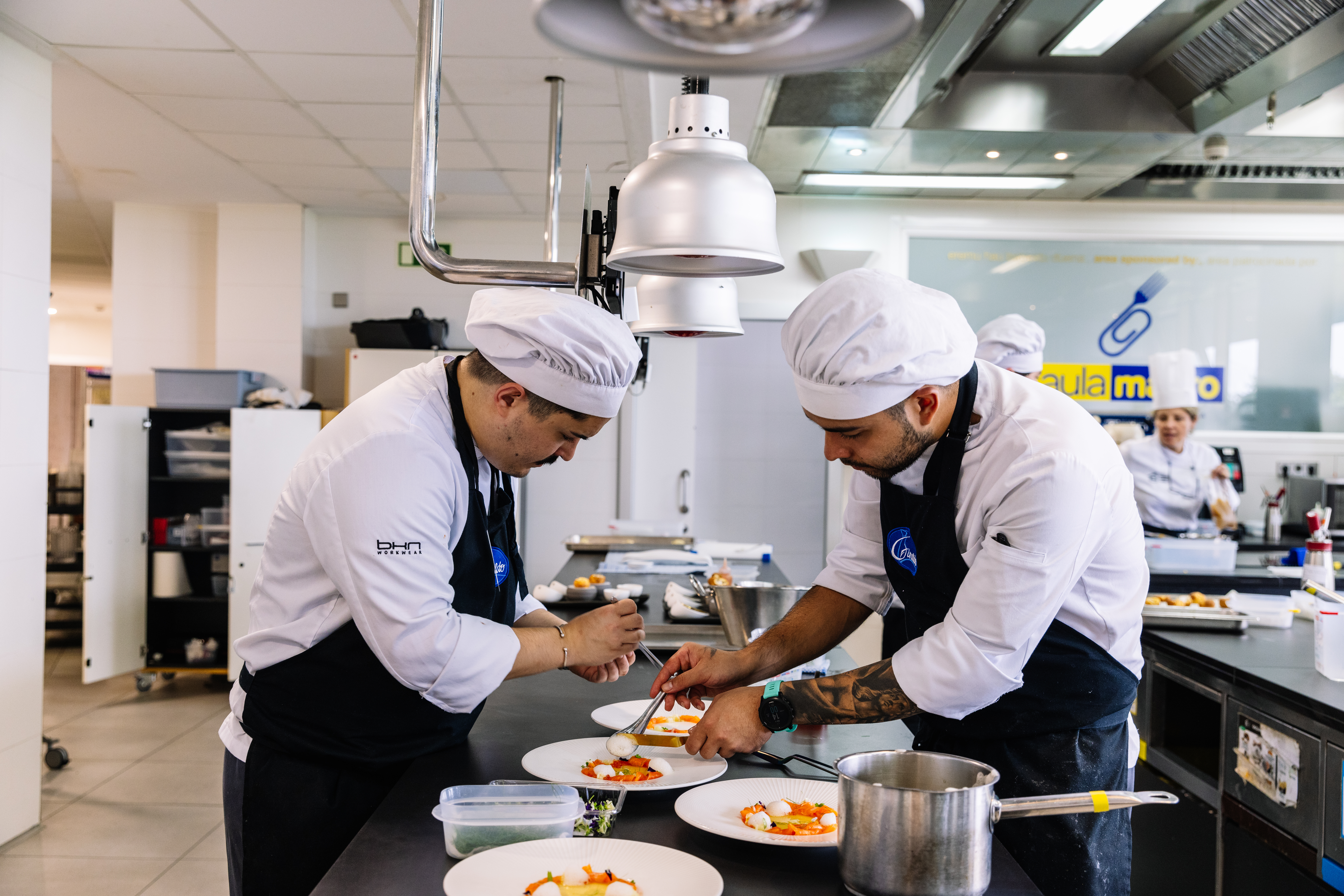
- Simulations and practice in real settings, such as the Restaurant Workshop, a space open to the public where you will put the knowledge acquired into practice for 5 weeks in a full service with real customers.
External curricular internships
During the master’s you will have the opportunity to apply the knowledge acquired in real settings, joining kitchen teams of reference both nationally and internationally. From Basque Culinary Center we manage your internship taking into account your profile, your interests and the opportunities available.
Before starting, you will have an informative session and personalized support from academic coordination, which will help you identify the most suitable destinations and adjust your professional expectations.
Internships last three months full-time, with the possibility of extension, and are a real opportunity for labor insertion: most participants continue working or access new positions at the end of the program. If you have consolidated professional experience, you will be able to validate the internship by submitting the corresponding documentation.
Examples of internship destinations in previous editions:
Students from previous editions have interned in high-end gastronomic restaurants both nationally and internationally, collaborating with some of the most influential projects on the current culinary scene.
- Internationally: Alchemist (Denmark), Noma (Denmark), Mirazur (France), The Glove (United Kingdom), and Osteria Francescana (Massimo Bottura, Italy), among others.
- Nationally: El Celler de Can Roca, DiverXO, Mugaritz, Quique Dacosta, Elkano, Le Invernadero (Rodrigo de la Calle), Akelarre and Arrea!, among other restaurants of reference.
Learning Journeys
Throughout the program you will experience two Learning Journeys, learning experiences outside the classroom that will allow you to understand gastronomy from its origin and across its entire value chain.
You will visit restaurants, markets, wineries and production centers linked to agriculture, livestock farming and fishing, observing first-hand how the processes and decisions that define contemporary cuisine are articulated.
Examples of experiences from previous editions:
- Salt Valley of Añana and restaurant Almazen, to learn about the link between territory and product.
- Ordizia Market, a historic epicenter of Basque gastronomic trade, where distribution processes and the freshness of products such as Gula del Norte were analyzed.
- Txakoli HIKA and Restaurante Frontón de Tolosa, to understand collaboration models between wineries and restaurants.
- Visits to cheese dairies, wineries and local producers, where students were able to talk directly with those who sustain the gastronomic identity of the area.
These experiences take place in San Sebastián and its surroundings, a privileged context where gastronomy is lived every day inside and outside the classroom.
PRO Seminars
PRO Seminars complement the training with inspiring encounters with some of the most influential professionals on the gastronomic scene. Through talks, workshops and demonstrations, students access diverse views on creativity, management, tradition or culinary innovation.
Among the speakers and outstanding experiences of previous editions:
- Aitor Arregi (Elkano): the value of the product and grill cookery.
- Mario Sandoval: financial management applied to the restaurant sector.
- Dabiz Muñoz: creativity, innovation and the development of new projects.
- Albert Boronat: the importance of traditional cuisine and sauces.
- Fernando Aréllano: ideation, storytelling and creative processes.
- Arzak Challenge: a research project and reinterpretation of the history of New Basque Cuisine. Students design an 18-course tasting menu inspired by the evolution of restaurant Arzak, culminating in a presentation before Elena Arzak and J.M. Aizega.
Master’s Final Project (TFM)
In the TFM you will put into practice everything you have learned during the Master’s. You will have individual tutoring from specialized lecturers and professionals, who will accompany you throughout the process of conceptualization, development and presentation in which, together with your classmates, you will conceptualize a gastronomic proposal and bring it to life in the restaurant of Basque Culinary Center. There you will cook and serve real customers, facing the challenge of a professional service and receiving direct feedback to keep improving. It will be a unique opportunity to live from the inside the experience of creating, managing and refining a real culinary project.
The final defense takes place before a panel of experts, assessing both the technical quality and the professional viability of the project.
In some cases, the TFM is integrated with professional internships in prestigious restaurants such as Quique Dacosta, Le Invernadero, Akelarre or Arrea!, making it possible to extend the stay and consolidate the experience in haute cuisine settings.
Faculty
The Master’s in Advanced Cookery has a teaching team made up of professionals in the field of gastronomy. This team combines academic experience with a practical approach, integrating experts and lecturers from both the Faculty of Gastronomic Sciences (Basque Culinary Center) and specialized professionals from leading companies and institutions in the sector.
Coordination
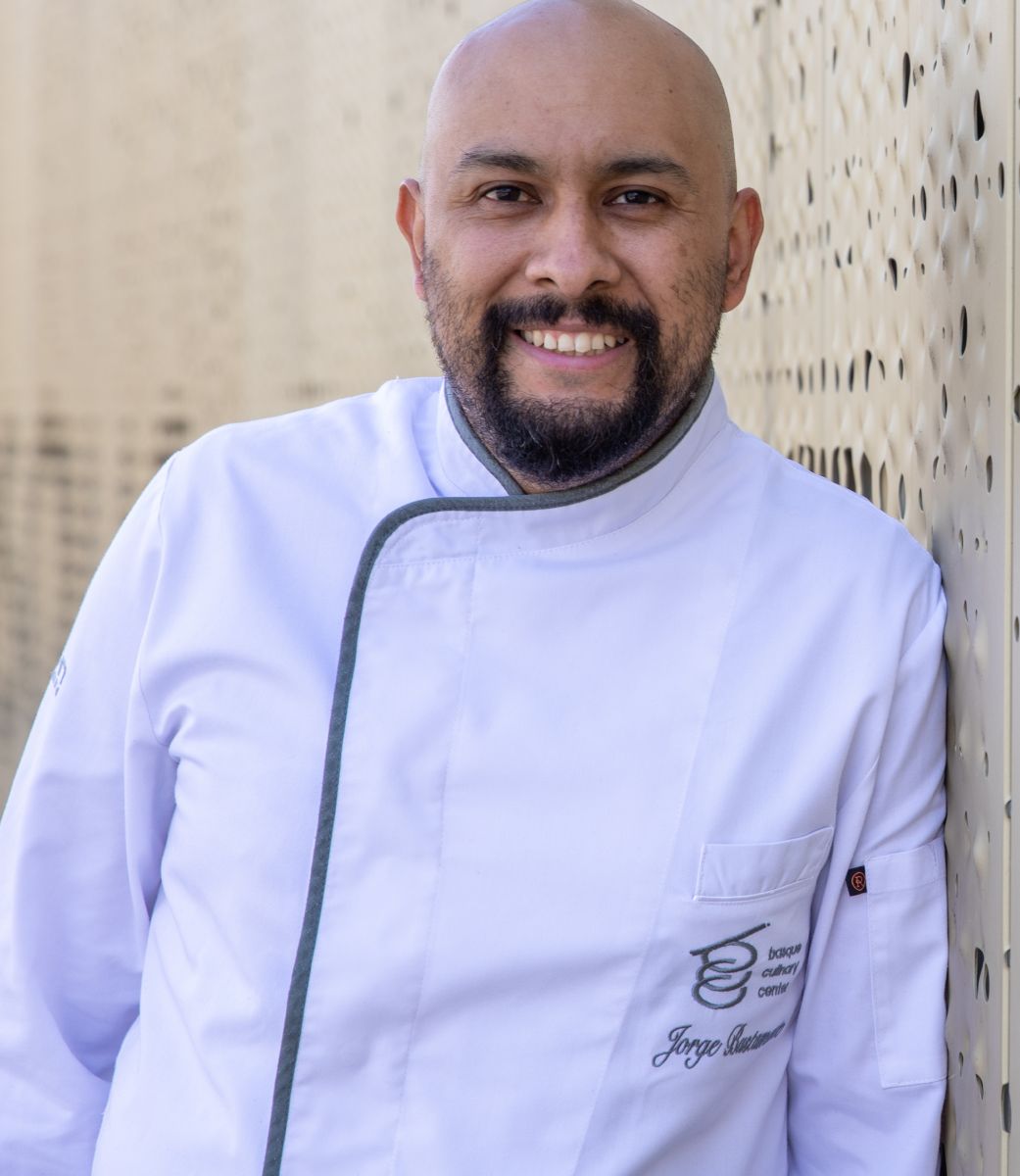
Jorge Bustamante
Master’s Chef Coordinator
With more than six years training new generations at Basque Culinary Center, he combines his experience as a lecturer and chef-researcher to connect haute cuisine with innovation and the development of new gastronomic products. His career includes more than a decade in some of the most influential projects in Basque gastronomy: he was sous chef for three years at Bodegón Alejandro and four years at A Fuego Negro, taking part in the creation of the restaurant’s current concept. He was also part of the team at Arrea!, a restaurant recognized with a Michelin star. Passionate about research and education, he inspires future professionals to understand the kitchen as a space of constant evolution, where curiosity, technique and creativity become knowledge and experience.
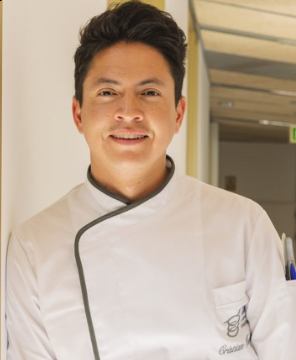
Christian Marquina
I am a chef specializing in Technique, Product and Creativity. My career has developed between haute cuisine, team management and the strategic support of gastronomic projects.
Food and Beverage Technologist and holder of the Master’s in Culinary Technique and Product from Basque Culinary Center, I have worked for more than 15 years in highly demanding international environments. I started my professional career in Ecuador and continued my development in different kitchens in New York, before consolidating my path in Spain, as part of restaurants such as Mugaritz, Miramar and Cal Enric, linked to projects recognized by the Michelin and Repsol guides.
I currently lecture at Basque Culinary Center and coordinate the kitchen area of Lifelong Learning.
Main team
Profesora BCC
A graduate in Gastronomy and Culinary Arts, specialized in gastronomic innovation and business development. She contributes to projects that integrate creativity, strategy and the development of new models within the culinary ecosystem.
Docente del área de sala y sumillería
Lecturer in Front-of-House and Service at Basque Culinary Center. She holds a degree in Psychology and has been linked to restaurant service and sommellerie, with more than 15 years of teaching experience. Accredited trainer for Sherry and Cava wines. WSET Level 3.
Profesor BCC
Bakery lecturer. Experience at Disney Cruise Line and Martín Berasategui.
Profesor BCC
An agronomist and specialist in baking technology, he teaches food quality, product and bread-making. He brings technical knowledge and a practical approach to processes, fermentations and grain transformation.
Profesor BCC
Master’s lecturer. International experience in kitchens and Michelin-starred restaurants.
Colaborador experto
He is currently a lecturer in culinary avant-garde at Basque Culinary Center and Executive Chef of Athletic Club. He has extensive hospitality experience: among other roles, he has been Executive Chef of the Aqua Group in Asia, Head Chef at Hotel Villamagna 5* GL in Madrid and Hotel Peninsula Beijing 5* GL. He has also worked in Michelin-starred restaurants such as Tickets, Echaurren and El Invernadero by Rodrigo de la Calle.
Profesora titular
She began her gastronomic career in Dublin. She grew as a restaurant manager in well-known establishments and trained at the WSET in London as a professional sommelier. After five years she returned to her hometown, Barcelona, where her passion for pastry led her to the Hofmann Hospitality School. She joined the school’s teaching team and the pastry production team.
Cristina has been at Basque Culinary Center for three years as a professor and tutor on the Master’s in Restaurant Pastry and Sweet Cuisine, teaching the most essential, creative and innovative side of pastry.
Lecturers and collaborators
The Master’s also incorporates the participation of organizations, as well as recognized experts from industry, who provide an up-to-date perspective. This teaching team may vary in each edition to ensure the best combination of specialized knowledge and innovative perspectives. For example:
Colaboradora experta
Marta is a respected sommelier and wine expert, known for her expertise in pairing wines with gourmet cuisine. She has curated wine lists for prestigious restaurants and has a deep understanding of the world of oenology.
Colaborador experto
Rafa Zafra is a highly regarded chef who specializes in Andalusian and Mediterranean cuisine. His culinary expertise has earned him critical acclaim, and he is recognized for his dedication to traditional flavors.
Colaborador experto
Albert is a culinary entrepreneur and expert in the field of gastronomy. He has been involved in various culinary ventures and brings a wealth of knowledge about the culinary industry.
What our alumni say
The program gave me knowledge and techniques to be autonomous in creating new dishes, teaching me to understand how ingredients behave and to explore techniques from the most avant-garde to the most traditional. Passionate lecturers and first-class facilities were key in this transformative experience, allowing me to take the lessons learned to a wider audience through my passion for gastronomy.
María Lo
Chef and Digital Communicator
It was a transformative experience: it not only deepened my culinary skills with contemporary techniques and trends, but also gave me the opportunity to work with seasonal products and learn from highly regarded chefs in the sector. This professional enrichment opened the door to my current position at Restaurante Narru, a space where haute cuisine meets the simplicity and quality of local products.
Catalina Navas
Chef de Partie, Restaurante Narru
Admission process
The Master’s in Advanced Cookery has an admission process that ensures candidates have the academic level and competencies needed to successfully complete a demanding study program.
This Master’s is aimed both at professionals with university studies and at those who, without holding a university degree, can demonstrate relevant experience in the sector.
The admission system of Basque Culinary Center has a dual objective:
- To ensure that candidates have the academic level and personal competencies needed to successfully take on an innovative and practical study program.
- To check that the Master’s meets the training needs and interests of the candidates.
1. Registration
Complete the online registration and pay the registration fee of 150 € (fully refundable if you are not admitted).
Complete the Application Questionnaire, which will allow us to get to know your profile and your interests in the Master’s better. To do so, please have the following documents ready:
- Updated Curriculum Vitae.
- 1 passport-sized photo.
- Copy of your ID card or passport.
- Academic certificate of the studies completed (transcript, diploma or certificate). –Submitting certificates is not compulsory, but their inclusion will be valued positively if you have them.
2. Assessment of the application
- Take part in the online personal interview with the Master’s Coordinator, an opportunity to get to know you better, resolve doubts and raise questions about the program.
- Both the documentation submitted and the outcome of the interview will be assessed.
- You will receive the admission decision together with the next steps to follow.
3. Admission and place reservation
If you are admitted, you will need to pay 25% of the Master’s fee within the indicated period to reserve your place.
Notice for international students
To take a training program lasting more than 90 days, students from countries outside the Schengen area (check the list of countries) need to apply for a LONG-TERM STUDENT VISA in order to reside legally in Spain. The Faculty will provide each student with the documentation needed to process the visa once the place reservation has been confirmed.
In addition, the student must complete the remaining requirements indicated by the Embassy of Spain. You can check the full process in this section on procedures before travelling. Basque Culinary Center will provide the following academic documentation, required for visa processing:
- Enrollment certificate signed and stamped by Basque Culinary Center.
- Training program stamped by Basque Culinary Center.
- Academic calendar stamped by Basque Culinary Center.
Fees and payment
Total Master’s fee: 13.550€
Payment methods
- 150€ upon submission of the application (fully refundable if you are not admitted).
- 25% of the total, 3.350€ upon confirmation of admission as a place reservation.
- The remaining amount in 3 installments of 3.350€ to be paid during the academic year.
FINANCING OPTIONS - FIND OUT MORE
Would you like to invest in your professional future, but need support to do so? We have financing options to facilitate access to our training programs. If you would like more information, complete the following form.
FUNDAE FUNDING
This Master’s is partially eligible for FUNDAE funding for employees in Spain. Check the conditions and how to process the funding when completing your enrollment here.
The Master’s fee includes:
- Basque Culinary Center uniform.
- Academic materials and access to the learning platform.
- Learning journey (transport and accommodation expenses).
- Masterclasses with guest chefs.
- Management of curricular internships.
- Issuance and shipping of the diploma.
- Access to the more than 5,000 references in the Faculty Library.
- Registration in the Basque Culinary Center alumni service: Bculinary Alumni.
As a member of the BCC Alumni community, you have access to exclusive discounts on our programs and training activities. Below are the benefits available depending on the training you have previously completed:
I AM A BACHELOR’S OR MASTER’S ALUMNI
- 10% discount on Master’s programs
- 10% discount on Specialization Courses
- 10% discount on Intensive Courses, workshops, seminars and master classes
- 10% discount on WSET Courses (Levels 1, 2 and 3)
I AM A SPECIALIZATION COURSE ALUMNI
- 5% discount on Master’s programs
- 5% discount on Specialization Courses
- 10% discount on Intensive Courses, workshops, seminars and master classes
- 10% discount on WSET Courses (Levels 1, 2 and 3)
To benefit from the discount, if you want to take a master’s or specialization course (either online or on-site) you must complete the registration process as usual. The discount percentage will be applied to the last installment of the course and you will be notified at that time. After registering, you can let us know that you are Alumni by emailing alumni@bculinary.com. If you register with your @alumni account, this last step is not necessary. If the tuition fee is paid in a single payment, please contact alumni@bculinary.com before registering to request the discount code you need to enter during the registration process.
If a visa is required due to nationality, a type C (Schengen) visa must be requested to enter Spain.
International students must travel with the official documentation accrediting their enrollment on the course and proof of the health insurance that will cover them during their stay in Spain.
SCHOLARSHIPS AND FINANCIAL AID FOR MASTER’S PROGRAMS
Due to the official nature of the degree, students legally residing in Spain may apply for public scholarship or aid programs. International students can also seek funding and scholarships from institutions in their home countries that support studying abroad.
ERASMUS+ SCHOLARSHIPS
Students may apply for international mobility aid to complete internships in Europe under the Erasmus+ program.
EMPLOYABILITY SUPPORT FOR STUDENTS
To support students in finding employment during or after their studies, students on this Master’s will receive information on job offers received by the faculty.
During their stay they may also apply for the study-work scholarships offered by the Faculty and provide services in different departments: R&D, operations, cafeteria, etc.