Presentation
For those who want to research, transform, and rethink the food system through gastronomy.
The Master’s Degree in Gastronomic Sciences combines applied research and the development of innovative solutions in food, integrating disciplines such as social sciences, sustainability, food technology, and anthropology. Its research-driven approach enables a critical and multidimensional analysis of the gastronomic system, preparing professionals to lead change in the food industry.
Throughout the program, you will apply scientific methodologies and tools to investigate food trends, develop innovative products, and design sustainable gastronomy strategies. By combining theory and practice, you will work collaboratively with academic institutions and companies in the sector on applied research projects, developing proposals aligned with current challenges in food and consumption.
This Master’s stands out for its interdisciplinary and innovation-driven approach, equipping students with critical thinking and a systemic perspective to act as changemakers within the food system. From developing sustainable business models to implementing emerging technologies in food, you will acquire key competencies to generate knowledge and drive change in academia, industry, and society.
This program is delivered 100% in English. Therefore, it is mandatory to have a B2 level or higher, which can be demonstrated through official certificates, studies completed in English, or professional experience in English-speaking countries.
Upon completion, you will be prepared to take on roles such as researcher in gastronomy and food, consultant in gastronomic innovation, product developer or project manager in sustainable food initiatives, applying advanced methodologies in real environments. This Master’s will allow you to take part in the redefinition of Gastronomic Sciences, driving the creation of innovative solutions that transform the sector.
Why take this master’s
1 - You will learn research methodologies in gastronomy and acquire advanced knowledge to develop science- and technology-based business and product proposals.
2 - You will work in intercultural and multidisciplinary teams, integrating diverse perspectives to create innovative and creative projects.
3 - You will tackle real-world challenges related to research into new gastronomic services, products and experiences.
4 - You will integrate knowledge of sensory, aesthetic, technical and nutritional aspects in gastronomic research.
5 - You will explore current food trends to drive innovation in gastronomy, the restaurant sector and the food industry.
6 - You will learn from lecturers at leading universities and institutions, with personalized guidance and feedback from specialized tutors.
7 - You will visit technology centers, R&D units of food companies and innovative gastronomic business models.
8 - You will attend gastronomic congresses and take an active part in entrepreneurship and business development initiatives.
9 - You will develop your Master’s Thesis in R&D units of restaurants, research centers or internationally recognized companies.
10 - You will be part of Basque Culinary Center and GOe Gastronomy Open Ecosystem, gaining access to a global network of leading institutions and professionals in the sector.
Learning objectives
Analyze the food system from a transdisciplinary perspective, integrating knowledge from gastronomy, industry, science and society.
Evaluate current food-related challenges by considering social, cultural, economic and environmental factors.
Implement research methodologies in gastronomic projects, combining scientific, technological and anthropological tools.
Optimize communication and collaboration in multicultural and interdisciplinary environments to foster gastronomic innovation.
Design research and development strategies in gastronomy applied to product innovation, sensory analysis and project management.
Career opportunities
Upon completing the Master’s, you will be prepared to take on key roles in various areas related to gastronomic research, food innovation and project management in the gastronomic and food sector. Career paths include:
-
Research and development
- Conduct research on food trends, sensory impact and sustainability.
- Apply scientific methodologies in universities, technology centers and innovation laboratories.
-
Innovation and product development
- Create and enhance innovative gastronomic experiences in the food and restaurant industries.
- Design functional and sustainable products, incorporating emerging ingredients and advanced technologies.
-
Gastronomic ecosystem management
- Implement strategies to develop sustainable and resilient food environments.
- Apply knowledge in public organizations, NGOs and projects with an impact on food security.
-
Consulting and strategy in food innovation
- Advise on gastronomic business models focused on sustainability and digitalization.
- Apply digital transformation in the food industry, developing data-driven market strategies.
-
R&D in companies and restaurants
- Lead innovation projects in high-end restaurants, restaurant chains and food-tech startups.
- Design R&D methodologies to create new gastronomic products and disruptive services.
-
Teaching and knowledge dissemination
- Teach at universities and specialized centers in gastronomy and food innovation.
- Generate academic content and develop research with an impact on the scientific and professional community.
-
You can add value to:
- Universities and centers dedicated to gastronomic and food research.
- Agri-food companies focused on product development, sustainability and innovation.
- International organizations and NGOs with an impact on food systems and food security.
- Startups seeking to develop new food solutions.
- Restaurants and HORECA businesses interested in optimizing processes and implementing innovative methodologies in the kitchen.
This broad range of opportunities will enable you to integrate into key sectors, applying scientific approaches and methodologies to generate impact in the gastronomic and food industry.
This broad range of opportunities will enable your integration into key sectors, applying scientific approaches and methodologies to generate impact in the gastronomic and food industry.
Study program
The Master’s study program combines advanced theory and applied practice, providing key competencies in gastronomic research, food innovation, product development, sustainability in food systems and project management in the gastronomic and food sector. It is completed with a Master’s Thesis (TFM).
1st Semester | 30 ECTS
- Design of Products and Services | 8 ECTS
- Gastronomy Research Methodology | 6 ECTS
- Gastronomy Project Management | 6 ECTS
- New Business Models in the HORECA Sector | 3 ECTS
- Sensory Perception | 7 ECTS
2nd Semester | 30 ECTS
- Statistics Applied to R&D | 6 ECTS
- Development of New Business Management Models | 6 ECTS
- Design and Architecture of Dishes and Menus | 6 ECTS
- Sociocultural Effects of Trends in Gastronomy | 8 ECTS
- Knowledge Transfer | 4 ECTS
3rd Semester - Master’s Thesis 30 ECTS
During the second year, you will develop a Master’s Thesis (TFM) in leading companies, laboratories or technology centers, both nationally and internationally. Through this project you will apply the competencies and knowledge acquired in a real professional context.
Some examples of areas in which you can develop the TFM are:
- Sustainable and fermented foodstuffs - Future Food Institute and Smaakpark - Carlos Suárez
- Gastronomy as a platform for social innovation - Agirre Lehendakaria Center for Social and Political Studies - Farah Reza
- Kokumi substances in miso and fish sauces (Garum) from koji and their different aroma - Harvard University - Nabila Rodriguez
- Culinary dialogues: gastronomic events as incubators of transdisciplinarity - Dialogues de Cocina (Basque Culinary Center) - Constanza Díaz del Castillo
- Cooking, science and sustainability: co-designing a participatory food education program - El Celler de Can Roca - Clara Pallarés
- Prototyping with alternative protein and new technologies: texture characterization, sensory evaluation, shelf life, nutritional analysis and consumer research - Azti Tecnalia - Laura García Fontanal
Who it’s for
The Master’s Degree in Gastronomic Sciences is designed for students and professionals seeking to specialize in gastronomic research, food innovation and project management, developing skills in product development, sustainability and food system analysis and applying knowledge in academic and professional environments in the gastronomic and food sector. Through this Master’s, participants will strengthen their profile in food research and development, gaining access to scientific tools and methodologies that will allow them to evolve in their career.
This master’s is for:
- Graduates in Gastronomy, Nutrition, Food Technology, Biotechnology, Biochemistry, Pharmacy, Biology, Chemistry, Environmental Sciences, Anthropology, Applied Sociology, Business Administration and Management, as well as related disciplines.
- Professionals with experience in the agri-food and gastronomy sectors who wish to complement their training with systemic knowledge in innovation and food sustainability project management.
- Researchers or academics who want to apply methodologies to the study of food systems, food security and gastronomic product development.
Don’t see yourself reflected in the points above and are you interested in the master’s?
If your degree or experience is not included in the lists and you are interested in this master’s, contact us so we can assess your case and provide personalized information.
Calendar
| Academic period | Dates | Schedule |
|---|---|---|
| First year | From October 2026 to June 2027 | Monday to Friday, 9:00 to 14:00 (CEST) |
| Second year | From September 2027 to January 2028 | — |
Methodology
The Master’s Degree in Gastronomic Sciences is delivered through the learning by doing methodology, based on practice, experimentation and collaborative learning. This approach allows you to acquire essential competencies and progress toward specialized applications. The curriculum is designed in progressive phases, integrating theoretical classes with practical activities and real projects.
Key elements of the methodology
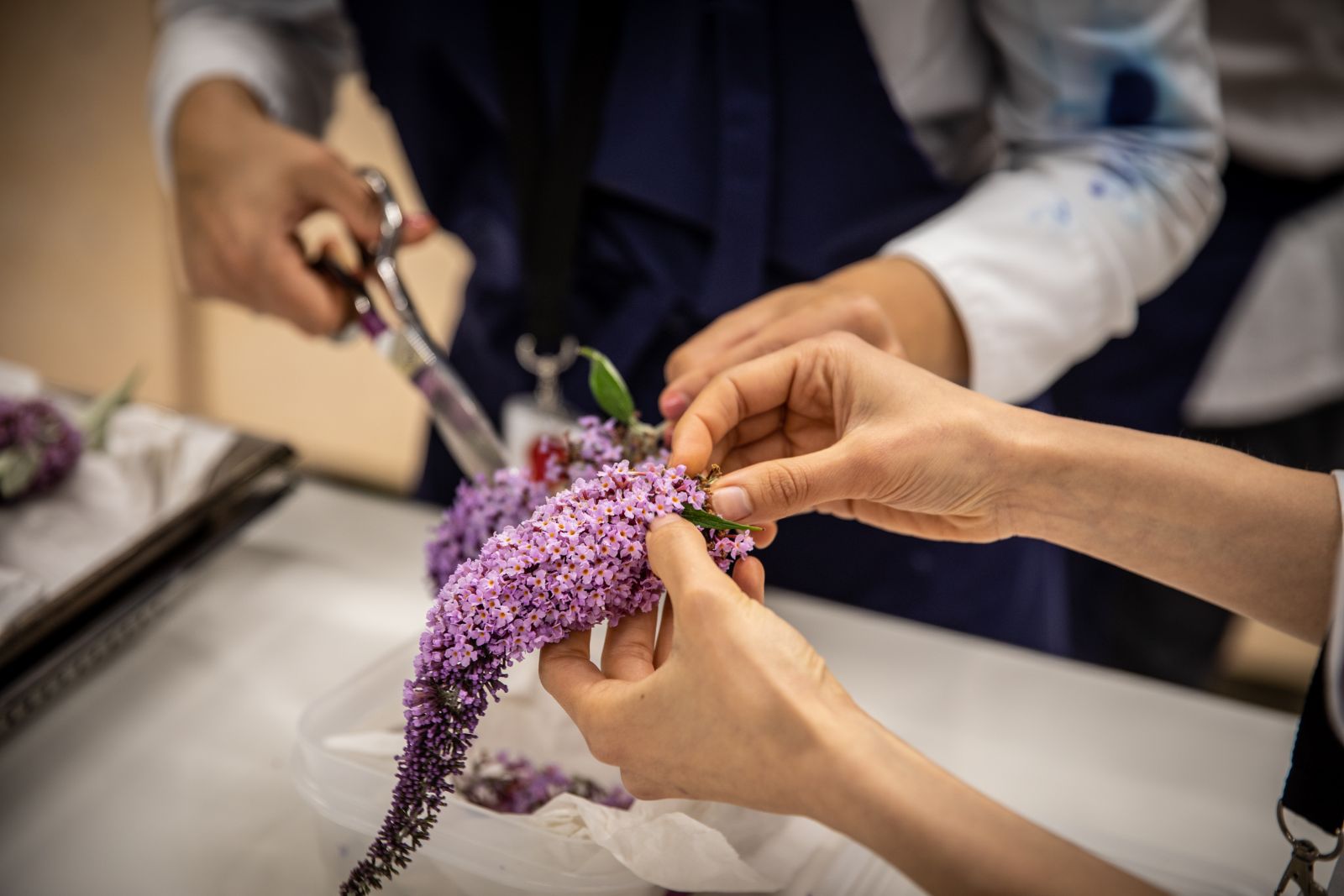
- Theoretical-practical classes: Design of new products by exploring food microstructures and physicochemistry, applying this knowledge in hands-on cooking sessions with chefs. Design, generation and analysis of sensory evaluation tests with consumers and products, applying statistical techniques.
- Case studies and simulations: DSTAGE Challenge, a project in collaboration with the restaurant’s R&D team, where students work on real-world development challenges.
- Team projects and case studies: Participation in a two-week BootCamp, where they must create a startup from scratch, defining its value proposition, user profile and product strategy.
- Seminars with experts: Masterclasses with leading professionals in the sector and workshops with specialists in innovation and gastronomy.
Featured learning experiences
Core Project (Main Project): developed during the first year of the Master’s. The aim of this project is for students to carry out research with a real outcome, whether the publication of an article, a startup, the development of a product, an application, a film, a new tool, a social innovation project or any other real result they can imagine.
Example topics:
- Food Democracy
- Food Diaspora
- Gastronomy from a Gender Perspective
- Ferment-nation
- FoodTech
- Ancient Technology
- Fungi-World
- Emotion, Rituality and Well-being
- Social Innovation
- Food Waste
- Gastronomic Performance
Assessment system
The process combines continuous assessment with specific tests at key moments of the Master’s. Assessment is based on:
- Participation in dynamic classes and workshops.
- Development and presentation of individual and group projects.
- Practical assessments in laboratories and real cases.
- Exams and technical tests.
- Core Project (main project).
Examples of Core Projects
Examples of challenges
Faculty
The Master’s Degree in Gastronomic Sciences has a teaching team made up of researchers and professionals recognized nationally and internationally in disciplines such as social sciences, applied research, anthropology, sustainability and food technology.
This team combines academic experience with a practical approach, integrating lecturers and experts from the Faculty of Gastronomic Sciences (Basque Culinary Center) and specialized professionals from leading companies and institutions in the sector.
Coordination
Constanza Diaz del Castillo
Constanza is a designer and gastronomic scientist, specializing in the integration of design and science in the gastronomic field. She has worked as an instructor in gastronomic training programs, including the Gastronomy Academy at Andrés Bello Catholic University (LAGA). She has also collaborated on consulting projects to integrate sustainability into gastronomic education programs, such as the one developed for UCAB.
Faculty and collaborators
Profesora BCC
Research coordinator and researcher at BCC Innovation. She holds a degree in Biology, a degree in Food Science and Technology, and a Ph.D. in Agricultural and Food Sciences and Technologies. With over 15 years of experience in sensory analysis of food and more than 60 publications in indexed journals. She has previously worked as a sensory research and development manager at Hijos de Rivera S.A.U., as well as a researcher/professor at different universities (University of Vigo, Kansas State University, Miguel Hernández University of Elche).
Profesora BCC
Diploma in Human Nutrition, Bachelor's degree in Food Science and Technology, and Ph.D. in Agro-Environmental Technology for Sustainable Agriculture. María specializes in sensory analysis and sensometrics, with an emphasis on the psychological dimension of consumer behavior. During her thesis, she studied the emotional response of consumers to different foods. Since 2015, she has worked as a researcher in the sensory analysis area at BCCInnovation, developing research projects funded both publicly and privately.
Profesor BCC
Ph.D. in Applied Chemistry from the Autonomous University of Madrid. Cipriano has worked as a researcher at the Spanish National Research Council (CSIC), Universiteit van Amsterdam, Università degli Studi di Torino, and Stockholm University. Currently, he is a professor at Mondragon University within the Master's in Gastronomic Sciences and the Bachelor's in Gastronomy and Culinary Arts programs. His main research interests include fungal biotechnology and the development of various methodologies related to the extraction, fractionation, and analysis of bioactive and nutraceutical ingredients.
BCCko irakaslea
PhD in Physical Biochemistry from the University of East Anglia (Norwich, England) and researcher at the Institute of Food Research BBSRC, England. He was head of the Microstructural Characterization and Design Laboratory at the AZTI-Tecnalia food research technology center. He is currently Technical Coordinator of the Master’s in Gastronomic Sciences, Coordinator of the Food Development and Technology pathway of the Bachelor’s in Gastronomy and Culinary Arts at BCC, and Coordinator of the Sensory Perception and Consumer Preferences specialty at BCC Innovation. He is also editor-in-chief of the International Journal of Gastronomy and Food Sciences, published by Elsevier.
Profesora titular
She began her gastronomic career in Dublin. She grew as a restaurant manager in well-known establishments and trained at the WSET in London as a professional sommelier. After five years she returned to her hometown, Barcelona, where her passion for pastry led her to the Hofmann Hospitality School. She joined the school’s teaching team and the pastry production team.
Cristina has been at Basque Culinary Center for three years as a professor and tutor on the Master’s in Restaurant Pastry and Sweet Cuisine, teaching the most essential, creative and innovative side of pastry.
Profesor BCC
Bachelor's degree in Gastronomy and Culinary Arts and a Master's degree in Gastronomic Sciences from the Basque Culinary Center (Donostia-San Sebastián). Currently, he works at BCC as part of the coordination team for the Master's in Gastronomic Sciences. Originally from South Korea, he has worked at several restaurants including Relæ (Copenhagen), Alkimia (Barcelona), and Elkano (Getaria). He has a keen interest in the psychosocial aspect of the culinary field and in understanding the fusion of science and gastronomy.
Profesora BCC
Graduated in Food Science and Technology from the University of Granada and an Illustrator. A graduate of the Master's in Gastronomic Sciences at Basque Culinary Center, she received a scholarship to work in the Sensory Perception department of BCCInnovation and completed her master's thesis on interdisciplinary interactions in R&D teams in gastronomy. She is currently a member of the Technical Committee for the Master's in Gastronomic Sciences and a professor in the Bachelor's program in Gastronomy and Culinary Arts, as well as in several other master's programs offered at Basque Culinary Center.
Profesor BCC
Professional focused on Food Technology and Design. With an MBA from Universitat Politècnica de Catalunya, Yasser is passionate about finding solutions that add value. His expertise lies in explaining complex concepts to students regarding design, technology, and critical thinking in the gastronomic field.
Profesor BCC
Professor and coordinator of the avant-garde specialization at Basque Culinary Center. A graduate in Gastronomy and Culinary Arts from the same institution, he specializes in fermentation sciences, enzymes and ancestral techniques. He creates and develops products and processes from BCC’s avant-garde area, applying his expertise both in teaching and in gastronomic restaurants.
Collaborators and guest lecturers
The Master’s also incorporates the participation of organizations and experts from industry and academia, who provide an updated perspective on gastronomy, innovation and sustainability in the sector. This team may vary in each edition to ensure the best combination of specialized knowledge and innovative perspectives. For example:
- Dr Nabila Rodríguez – Researcher at Harvard University, specializing in fermentation and kokumi flavor perception.
- Dr Amparo Tárrega – Researcher at IATA-CSIC, specialist in sensory perception and consumer behavior.
- Charles Michel – Researcher in sensory perception and neurogastronomy.
- Carlos Velasco – Professor at BI Norwegian Business School, specialist in multisensory marketing and consumer behavior.
- José de la Rosa – Specialist in fermentation and food design, director of the Food Alchemist Lab at Future Food Institute.
- Jorge Ruiz Carrascal – Professor of Food Technology at the University of Copenhagen, researcher in science and cuisine.
- Felipe Turiel – Expert in R&D in gastronomy and restaurants.
- Dani Lasa – Co-founder of Imago S.L., consultant in innovation and gastronomy with projects at Can Roca and Fundación La Caixa.
- Sonia Massari – Expert in sustainable gastronomic design and food innovation.
What our alumni say
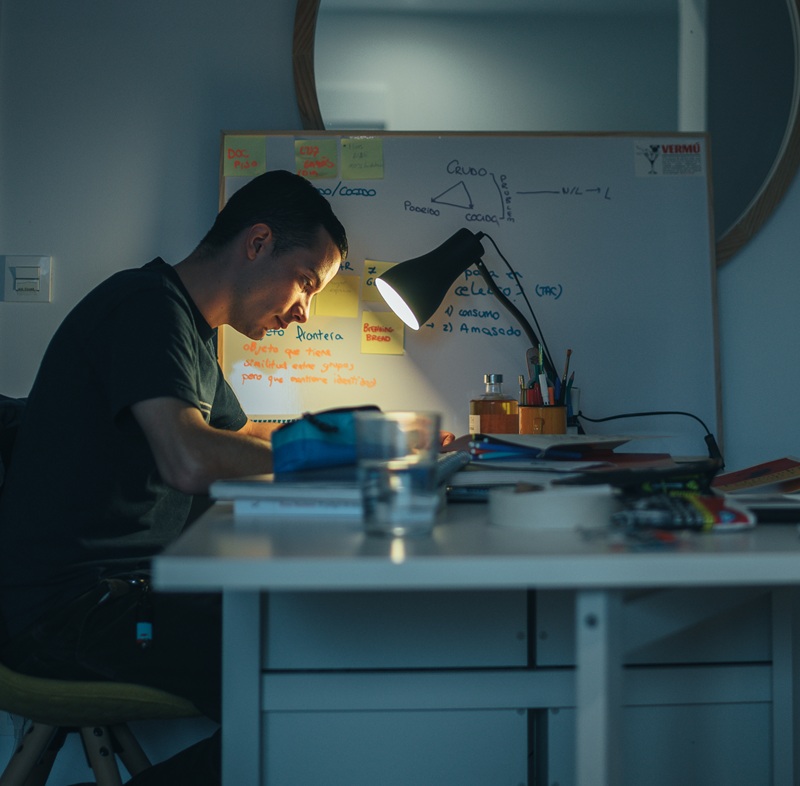
One of the most important lessons I learned during the Master was understanding that you can't do everything. The program is rich in content and activities, which forced me to prioritize and decide where to focus my energy. That exercise in conscious selection was incredibly valuable. I also learned a new language: the language of science, taught from multiple perspectives, which greatly enriched the experience. One of the most meaningful experiences was the Core Project. Our group had very different backgrounds and, perhaps naively, we chose to address a complex topic: the gastronomic diaspora. Without being sociologists, we learned to look at the same phenomenon from different angles. The project culminated in a magazine connecting sake culture in Japan with wine-making in Jerez.
Francisco José Polo
Admission process
The Master’s Degree in Gastronomic Sciences has an admission process that ensures candidates have the academic level and competencies needed to successfully complete a demanding study program.
1. Submit your application
The application period for the 2026 - 2027 academic year is open. Apply here.
2. Submit documentation
In addition to completing the online application, the required documentation must be submitted on the platform to confirm the admission pathway. You can see the documentation below:
Students in the final year of a bachelor’s degree
Academic transcript showing all grades obtained to date.
Students with university studies completed in Spain
- Certified copy of the degree certificate or university document confirming that the studies have been completed.
- Certified academic transcript.
Students with university studies completed in the EU, Norway, Iceland, Liechtenstein and Switzerland
- Stamped transcript and degree certificate.
- DS (Diploma Supplement) or, failing that, an equivalent document.
Students with university studies completed outside the EU, Norway, Iceland, Liechtenstein and Switzerland
- Apostilled degree certificate and academic transcript.
- Academic Technical Report, which must be requested from Host Students.
Admission degrees
- Direct admission
Students with prior training in the following bachelor’s degrees may be admitted directly.
- Bachelor’s in Gastronomy and Culinary Arts
- Bachelor’s in Gastronomy
- Bachelor’s in Mediterranean Gastronomy
- Bachelor’s in Human Nutrition and Dietetics
- Bachelor’s in Nutrition
- Bachelor’s in Food Technology
- Bachelor’s in Food Science and Technology
- Bachelor’s in Food Process and Product Innovation
- Admission with complementary training
Students with the following degrees must complete additional subjects before joining, each of which costs €90 per ECTS.
Scientific field
They must complete Culinary Techniques (3 ECTS) and Gastronomic Heritage (3 ECTS).
- Bachelor’s in Biochemistry
- Bachelor’s in Agri-Food and Rural Engineering
- Bachelor’s in Pharmacy
- Bachelor’s in Biology
- Bachelor’s in Biotechnology
- Bachelor’s in Chemistry
- Bachelor’s in Environmental Sciences
- Bachelor’s in Agrarian and Food Industry Technology
- Bachelor’s in Human Nutrition and Dietetics
- Bachelor’s in Nutrition
- Bachelor’s in Food Technology
- Bachelor’s in Food Science and Technology
- Bachelor’s in Food Process and Product Innovation
Humanities and Social Sciences field
They must complete Culinary Techniques (3 ECTS), Food Physical Chemistry (3 ECTS), Basic Statistics (3 ECTS) and Nutrition (3 ECTS).
- Bachelor’s in Art
- Bachelor’s in Anthropology
- Bachelor’s in Applied Sociology
- Bachelor’s in Psychology
Social and Legal Sciences field
They must complete Culinary Techniques (3 ECTS), Food Physical Chemistry (3 ECTS) and Nutrition (3 ECTS).
- Bachelor’s in Business Administration and/or Management
- Other cases: Students with degrees outside these categories will be assessed individually to determine their eligibility and whether they require complementary training.
- International students: Degrees from the European Higher Education Area (EHEA) and international education systems outside the EHEA are accepted, subject to an academic equivalency evaluation.
- Students still completing their bachelor’s: Applicants who have yet to complete their Final Degree Project (TFG) and up to 9 ECTS credits may be admitted, provided they meet the other admission requirements.
Language requirements
- The Master’s is taught entirely in English.
- Applicants must provide proof of a B2 level in English or higher according to the Common European Framework of Reference for Languages (CEFR).
- Native English speakers do not need to certify their level.
Additional documentation
- Updated curriculum vitae.
- Letter of motivation explaining your interest in the Master’s.
3. Profile and competency assessment
- Group dynamic: A group dynamic will be held in which the Master’s, its methodology and the academic team are presented. Participants will then be divided into 4 groups to carry out an activity designed to assess personal competencies aligned with the profile sought. The aim is to optimize the admission process and select the most suitable candidates.
- Online personal interview: An interview will be held to assess the candidate’s suitability based on their motivation and learning objectives.
4. Decision on your application
Once your application has been evaluated, the Master’s admissions team will inform you of the assessment of your candidacy for this edition of the master’s.
- If the assessment is positive, you will receive an offer of a place and, at that point, a payment of €1,000 will be required to reserve your place.
- If the assessment is not positive, we will inform you of the status of your application for this edition of the master’s and the reasons for the decision.
Fees and payment
Total Master’s fee: €17,010 (2026 - 2028 academic year)
1st year: €11,340
- €1,000 as a place reservation, to be paid within the first 5 days after receiving the admission notification.
- Remaining amount: two payment options:
- Single payment in October of €10,340.
- Payment in 9 monthly installments, from October to June, of €1,194.72 (includes a 4% surcharge for installments).
2nd year: €5,670
Two options:
- Single payment in September of €5,670.
- Payment in 5 monthly installments, from September to January, of €1,179.36 (includes a 4% surcharge for installments).
Based on your previous studies, we will inform you during the admission process if you need to complete Complementary Training before starting the Master’s. You can check here which Complementary Training applies to you according to the studies you have completed by the start of the program. Each application is assessed individually, also taking into account your professional experience for possible exemptions. Please note that each ECTS credit has an additional cost of €90.
The Master’s fee includes:
- Uniform
- Academic materials
- Graduation ceremony
- Sessions with guest experts
- Management of curricular internships and the Master’s Thesis
- Learning Journey (transport and accommodation expenses included)
- Access to more than 5,000 references in the Faculty library
Cancellation Policy
Basque Culinary Center reserves the right to cancel the program if the minimum number of students is not reached or for organizational, academic or force majeure reasons, providing at least 20 days’ prior notice. In such a case, a full refund of the amounts paid will be issued, without liability for additional expenses (travel, accommodation, visas or others). Optionally, relocation to another edition or an equivalent program may be offered.
As a member of the BCC Alumni community, you have access to exclusive discounts on our programs and training activities. Below are the benefits available depending on the training you have previously completed:
I AM A BACHELOR’S OR MASTER’S ALUMNI
- 10% discount on Master’s programs
- 10% discount on Specialization Courses
- 10% discount on Intensive Courses, workshops, seminars and master classes
- 10% discount on WSET Courses (Levels 1, 2 and 3)
I AM A SPECIALIZATION COURSE ALUMNI
- 5% discount on Master’s programs
- 5% discount on Specialization Courses
- 10% discount on Intensive Courses, workshops, seminars and master classes
- 10% discount on WSET Courses (Levels 1, 2 and 3)
To benefit from the discount, if you want to take a master’s or specialization course (either online or on-site) you must complete the registration process as usual. The discount percentage will be applied to the last installment of the course and you will be notified at that time. After registering, you can let us know that you are Alumni by emailing alumni@bculinary.com. If you register with your @alumni account, this last step is not necessary. If the tuition fee is paid in a single payment, please contact alumni@bculinary.com before registering to request the discount code you need to enter during the registration process.
If a visa is required due to nationality, a type C (Schengen) visa must be requested to enter Spain.
International students must travel with the official documentation accrediting their enrollment on the course and proof of the health insurance that will cover them during their stay in Spain.
SCHOLARSHIPS AND FINANCIAL AID FOR MASTER’S PROGRAMS
Due to the official nature of the degree, students legally residing in Spain may apply for public scholarship or aid programs. International students can also seek funding and scholarships from institutions in their home countries that support studying abroad.
ERASMUS+ SCHOLARSHIPS
Students may apply for international mobility aid to complete internships in Europe under the Erasmus+ program.
EMPLOYABILITY SUPPORT FOR STUDENTS
To support students in finding employment during or after their studies, students on this Master’s will receive information on job offers received by the faculty.
During their stay they may also apply for the study-work scholarships offered by the Faculty and provide services in different departments: R&D, operations, cafeteria, etc.
Quality
IQAS - Internal Quality Assurance System
The EHEA framework and the new changes introduced in Spanish regulations establish that universities must guarantee in their actions the fulfilment of the objectives associated with the programs they offer, also seeking continuous improvement.
For this reason, Basque Culinary Center has designed its own Internal Quality Assurance System in line with the principles and guidelines of the AUDIT program by ANECA (National Agency for Quality Assessment and Accreditation).
Institutional Accreditation
The Institutional Accreditation of University Centers is a process through which centers can achieve the renewal of the accreditation of the degrees they offer, through the certification of the implementation of their Internal Quality Assurance System (IQAS).
Verify
It is a program for evaluating proposals for official study plans designed in accordance with the EHEA (European Higher Education Area).
A favorable report from ANECA is essential for the degree to acquire official status.
Link to the Registry of Universities, Centers and Degrees (RUCT).
Modify
It is a program for proposing modifications to the verification report of an official degree.
This evaluation process has been replaced by Institutional Accreditation Follow-up.
Monitor
It is a program offered to universities to facilitate the monitoring of official degrees in order to verify their proper implementation and results.
This evaluation process has been replaced by Institutional Accreditation Follow-up.
Accredit
It is a program whose purpose is to assess official degrees. Its main objective is to check whether the results of the degree are adequate and guarantee the continuity of its delivery until the next renewal of accreditation.
This evaluation process has been replaced by Institutional Accreditation Follow-up.
Indicators
| Indicators of the Master’s Degree in Gastronomic Sciences | 2021-2022 | 2022-2023 | 2023-2024 | 2024-2025 |
|---|---|---|---|---|
| Total students enrollled in the Master’s Degree | 38 | 39 | 40 | 43 |
| Newly enrollled students on the Master’s Degree | 20 | 21 | 21 | 22 |
| Efficiency rate on the Master’s Degree (%) | 100 | 98 | 99,51 | 100 |
| Dropout rate on the Master’s Degree (%) | 0 | 5 | 5 | 9,52 |
| Graduation rate on the Master’s Degree (%) | 92,86 | 98,90 | 97,45 | 90,48 |
| Assessment rate on the Master’s Degree (%) | 100 | 96,73 | 98,37 | 96,95 |
| Student satisfaction on the Master’s Degree | 7,67 | 8,49 | 8,01 | 8,06 |
| Company satisfaction with professional internships on the Master’s Degree | 9 | 8,76 | 8,76 | 8,76 |
Docentia
It is a program that supports universities in designing their own mechanisms for managing the quality of university teaching staff and promoting their development and recognition.