Cursos Cooking

Degree:

Course in R&D in the Kitchen

Language:

Spanish

Dates:

To be confirmed

Duration:

6 ECTS

Schedule:

To be confirmed

Estimated Dedication:

No especificada

Precio total:

3,230.00 EUR

Registration fee:

150.00 EUR

Amount in installments:

3,080.00 EUR

Maximum places:

18

Place:

BCC

Presentation

Innovate in the kitchen with method, and avoid trial and error

Today, food science and the culinary arts are closer than ever, with interaction, synergies, and transdisciplinary exchange between them. In this context, the knowledge and skills that make it possible to apply scientific methodology to cooking are especially relevant, so that innovation processes in the kitchen are driven with scientific procedures and rigor.

Applied culinary research takes place both in restaurants (those with a cutting-edge vision, as well as those with R&D teams) and in the food industry. In that work, training chefs to take on the role of “research chef” is essential.

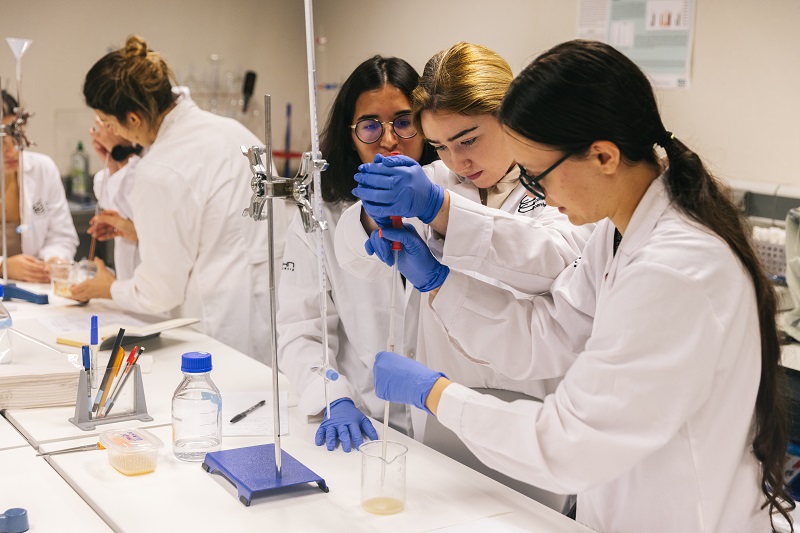
This course gives you the foundations for applying scientific methodology to innovate in the kitchen. You will learn to move from an intuitive approach to a structured, validated one. You will understand that this is not only traditional science, but using it as a tool to understand and improve cooking effectively.

Course objectives

The overall objective of the course is to understand the foundations of the scientific process in order to apply them to creativity and to innovation and development in the kitchen. More specifically, the course objectives are:

Equip participants with a scientific methodology for developing new dishes, menus, or gastronomic products.

Provide a basic grounding in food components and how they affect food formulation.

Develop sensory skills in order to bring knowledge of flavor and texture into the development of dishes and products with specific purposes, that are nutritious and appealing to the consumer.

Learn to search for and handle scientific information, by getting to know search engines, portals, and other information resources.

Set hypotheses and work objectives, and design an experimental plan using different methodological tools.

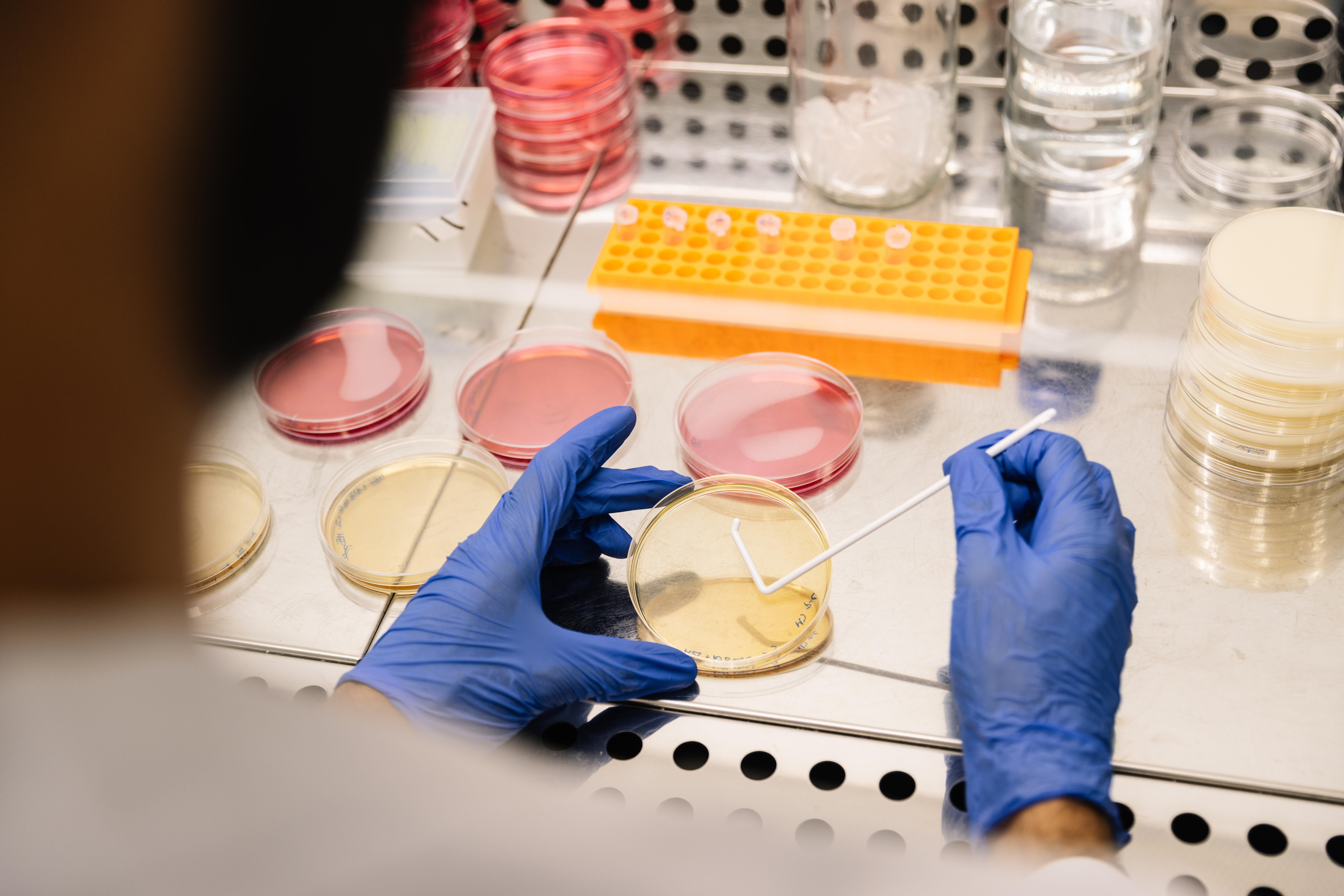
Carry out experiments applied to culinary and food developments that can be done in any professional kitchen.

Validate the hypotheses set, by processing the data and interpreting and discussing the results.

Train in the basic resources of written and oral scientific communication after a research process.

laboratorio gastronómico

Professional applications

After completing the course, you will be able to work in:

  • General areas of application
    • Culinary R&D (restaurants, production workshops, universities, central kitchens, technology centers, etc.) seeking to innovate in product creation
    • Product development and redesign for food industry companies (fifth range, institutional catering
    • Your own ventures in R&D projects
  • In-house trainer for dining room teams
    • Production workshops, industry, and central kitchens
    • Industry whose products are aimed at the Horeca channel
    • R&D (mainly restaurants and companies)
    • Kitchen
    • Quality departments
    • Central kitchen
    • Fifth range
    • Institutional catering
    • Your own ventures

Training program

  • What the host was like in the past and what the host is like today
  • Guest types adapted to their protocol models
  • Trends in current foodservice models
  • Evolution of restaurants and the dining room
  • Trends in beverage consumption and guests
  • Leadership and effective skills applied to the internal and external guest
  • Particularities of the internal and external guest
  • How to communicate with those who communicate
  • Conflict management and resolution in teams
  • Communication techniques applied to the dining room
  • Loyalty through immersion in the world of gastronomy 
  • Customer Experience as a tool for designing the experience
  • Tools for managing a dining room
  • Space as an element of comfort for teams and the guest
  • Trends in dining room service
  • Management applied to guest service: checklists, operating manuals…
  • The break-even point, the income statement, and management indicators.
  • Beverages and how to manage them
  • The break-even point, the income statement, and management indicators.
  • “Menu engineering” and clienting: guest strategies that improve revenue
  • Purchasing and supplier management. Quality and process management.
  • The world of wine:  the potential of wine as a sales tool
  • Pairing: an introduction and new trends.
  • Beer:  the product applied to new consumption occasions
  • An introduction to other products that energize the dining room experience
  • Culinary knowledge as the basis of sales in the dining room
  • Reservation systems as comprehensive business management tools
  • Dining room service as a business brand image
  • Digital marketing and social media

This course is aimed at chefs, cooks, and pastry chefs who are interested in doing R&D in the kitchen. The following profiles are included:
 

1. Cooks, chefs, pastry chefs, and corporate chefs

  • Independent professionals and hotel professionals who want to implement scientific practices in their kitchens

2. R&D cooks and test-kitchen cooks
 

3. Product development chefs

  • Focused on creating new dishes and culinary techniques

Don’t see yourself in these profiles, and the course interests you? Feel free to contact us (cursos@bculinary.com). The course coordination team will assess your training and experience, and we will give you a response about whether your profile is a good fit.
Calendar


Periods Dates Schedule and information
First edition To be confirmed First edition: to be confirmed.

Methodology

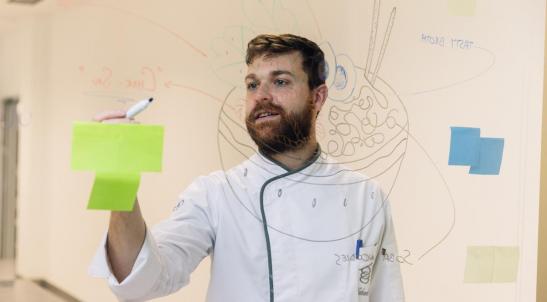
The course is taught through the learning by doing methodology, based on the idea that the best way to learn is through practical experience and direct action. This approach encourages you to acquire knowledge and skills by taking part in the kitchen and in experimentation spaces, applying the scientific method to challenges in real settings. In essence: see, think, and act with a scientific mindset when preparing innovative dishes.

Features of the learning process

  • Theory and practice sessions: a combination of theory and practice, focused on applying the scientific method in the kitchen
  • Exercises and case studies: activities focused on culinary innovation and problem-solving through experimentation
  • Innovation and culinary experimentation workshops: practical sessions on dish design, in the kitchen, and experimentation with culinary functionalities
  • Knowledge activation activities: exercises and readings that encourage reflection and the application of scientific thinking in the kitchen
  • Showcookings: live culinary demonstrations by expert cooks.
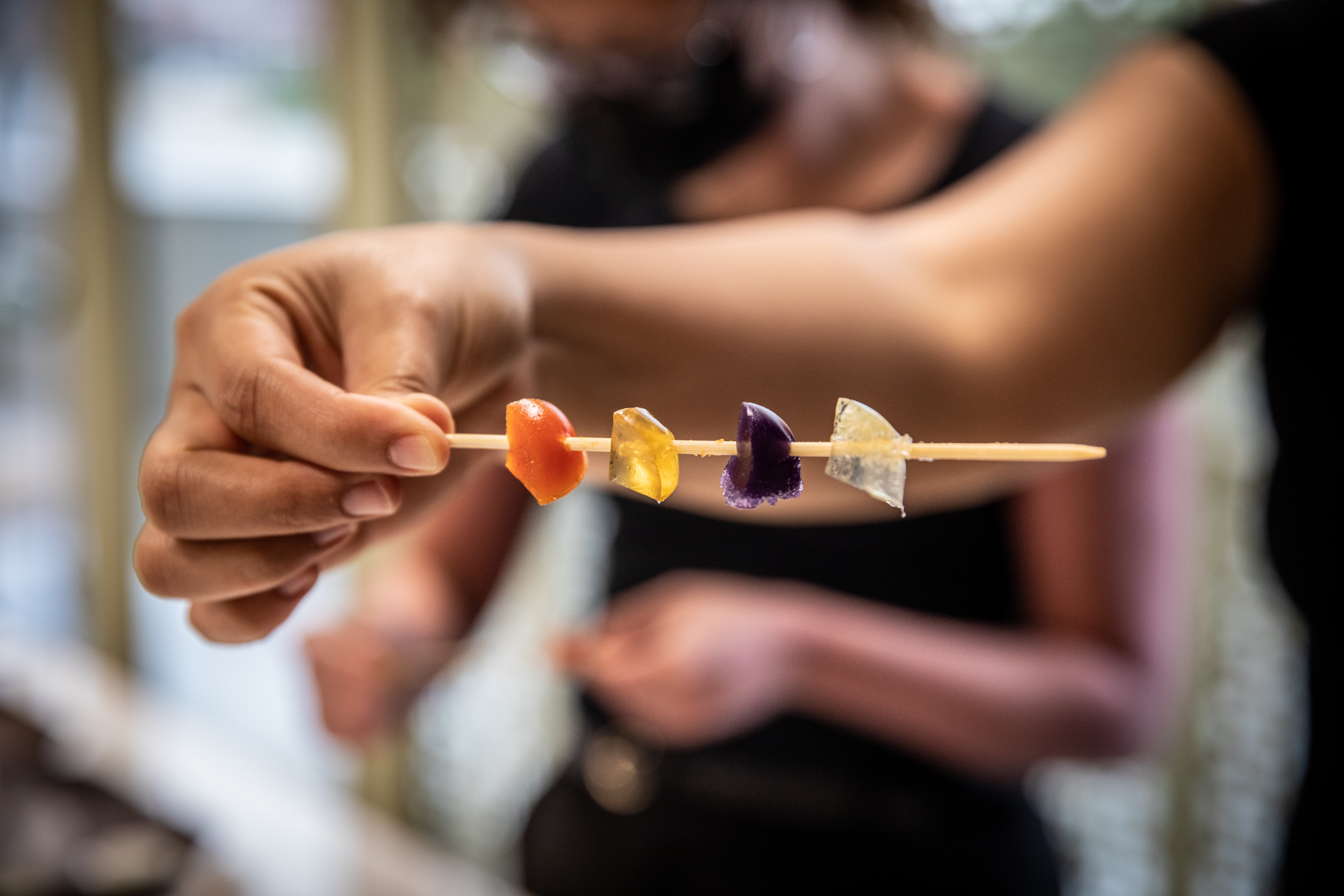
  • Tastings: to taste dishes and foods, and to analyze the sensory result of the experiments
  • Learning visit to experimental kitchens: a learning journey to a meaningful space that is relevant to the course (pilot plant, food industry, culinary laboratories, or research kitchens)
  • Virtual sessions: sessions focused on learning theoretical content and developing practical skills related to dining room management in the gastronomic sector. Throughout the learning process, different guest professionals will share their successes and failures through digital formats.
  • Methodology applied to the professional context of foodservice: all course content is designed to be applied immediately in the student’s work environment. Examples, exercises, and cases are adapted to different foodservice models, so each participant can transfer what they learn to their own professional reality.
  • Active student participation: the exchange of experiences among professionals is encouraged.
  • Challenge-based methodology: the program uses a challenge-based approach in which students take on a professional situation or challenge set by the faculty, linked to dining room management, the guest experience, or service improvement. Throughout the course, participants will work on analyzing and developing applied solutions, integrating the knowledge and tools they have acquired. The process ends with the presentation of the challenge, encouraging reflection, decision-making, and practical application in real contexts in the sector.

Faculty

Learn from industry experts and an interdisciplinary faculty!

Students will have the opportunity to learn from accomplished professionals in the field, recognized for their academic, intellectual, and social influence, as well as for their high-impact contributions. The program has a faculty panel, which may vary with each edition, made up of experienced experts in culinary arts and gastronomic sciences.

Coordination

Laura combines experience in the food industry with a distinguished academic career. She holds a degree in Food Science and Technology from the University of Zaragoza and completed her doctorate in Agricultural Chemistry at the Autonomous University of Madrid, focusing on food allergies to egg and milk during her time at the CSIC.

She is the coordinating professor of the specialization in Food Development and Technology in the Bachelor’s Degree in Gastronomy and Culinary Arts, and a researcher at GOeTech Center, where her work focuses on integrating food sciences and technologies into gastronomy in order to develop new products and innovative solutions across the food chain.

Professors and collaborators

Some of the program’s regular collaborators include:

Professionals distinguished by their diversity, who contribute to the academic richness of the program. They cover a broad range of specializations:

  • R&D cooks in restaurants: professionals with a strong focus on research and development in foodservice settings
  • Chefs in production management: responsible for leading kitchen teams and supervising gastronomic production in highly demanding settings
  • Industry cooks: professionals who apply their experience and knowledge in the food industry, working on the design and development of food products
  • Food technologists, library science specialists, and more

Admission process

The Basque Culinary Center admission system has a twofold objective:

  • Ensure that candidates have the academic level and personal competencies needed to successfully complete an innovative and demanding program of study.
  • Confirm that the master’s meets the candidates’ training needs and interests.

1. Complete registration

Pay the registration fee.

2. Submit your documents

Send the following documents to admisiones@bculinary.com:

  • A curriculum vitae.
  • A passport-size photo.
  • A photo of your national ID or passport.
  • A letter of motivation.
  • Optional: an academic certificate of completed studies (transcript, diploma, or certificate).

3. Assessment of your application

The admissions committee will assess the application documents submitted to confirm that the minimum training and/or experience requirements are met. If the profile is a good fit for the course, the candidate will be invited to a personal online interview and informed of the process to follow in order to reserve a place in the course. Otherwise, the reasons will be given and the registration fee will be refunded.

4. For international students:

For a training program with a total duration of less than 3 months, a visa is not required in most cases. If a visa is required because of nationality (see the list of countries), you must apply for a type C visa in order to enter Spain. For these short programs, the student must travel with documentation proving enrollment in the course and proof of health insurance covering the full length of their stay in Spain. 

Basque Culinary Center will provide the following academic documents, which are required to process the visa:

  • An enrollment certificate signed and stamped by Basque Culinary Center.
  • The training program and calendar, stamped by Basque Culinary Center.

The total price of the course is 3.230 €, paid as follows:

  • 150 € when you submit your application (fully refundable if you are not admitted).
  • The 40% of the amount, that is, 1.232 €, when admission is confirmed, as a place reservation.
  • The remainder, that is, 1.848 €, two weeks before the program begins.

The course price includes:

  • Academic materials.
  • Learning journey (transportation and accommodation costs).
  • Seminars and master classes included in the training program
  • Access to more than 5,000 references in the Faculty Library.
  • Issuance and delivery of the certificate/diploma.
  • Registration for the Basque Culinary Center alumni service: Bculinary Alumni

The course is eligible for FUNDAE funding. Contact us to check the conditions.
As a member of the BCC Alumni community, you have access to exclusive discounts on our programs and training activities. Below are the benefits available depending on the training you have previously completed:

I AM A BACHELOR’S OR MASTER’S ALUMNI

  • 10% discount on Master’s programs
  • 10% discount on Specialization Courses
  • 10% discount on Intensive Courses, workshops, seminars, and master classes
  • 10% discount on WSET Courses (Levels 1, 2, and 3)

I AM A SPECIALIZATION COURSE ALUMNI

  • 5% discount on Master’s programs
  • 5% discount on Specialization Courses
  • 10% discount on Intensive Courses, workshops, seminars, and master classes
  • 10% discount on WSET Courses (Levels 1, 2, and 3)

To benefit from the discount, if you want to take a master’s or specialization course (either online or on-site) you must complete the registration process as usual. The discount percentage will be applied to the last installment of the course and you will be notified at that time. After registering, you can let us know that you are Alumni by emailing alumni@bculinary.com. If you register with your @alumni account, this last step is not necessary. If the tuition fee is paid in a single payment, contact alumni@bculinary.com before registering to request the discount code you need to enter during registration.

If a visa is required because of nationality, a type C (Schengen) visa must be requested in order to enter Spain.

International students must travel with the official documentation that proves their enrollment in the course and proof of the health insurance taken out, which will cover them during their stay in Spain.

SCHOLARSHIPS AND FINANCIAL AID FOR MASTER’S DEGREES

Given the official nature of the qualification, students legally residing in Spain may apply for calls for scholarships or public financial aid. International students may also apply for funding and scholarships from institutions in their home countries that support study abroad.

ERASMUS+ SCHOLARSHIPS

Students may apply for an international mobility grant to undertake internships in Europe under the Erasmus+ program.

SUPPORT FOR STUDENT EMPLOYABILITY

In order to support students in their job search, during or after their studies, students in this master’s will receive information on the job offers received by the faculty.

During their stay they may also apply for the study-work scholarships offered by the Faculty and provide their services in the different departments: R&D, operations, cafeteria, etc.

Related products