

Presentation
A MASTER’S TO DRIVE THE EVOLUTION OF THE BREWING INDUSTRY
Beer is much more than a beverage: it is science, technology, innovation, sustainability and business. In a context shaped by changing consumption habits, the digitalisation of production processes and new environmental challenges, the brewing industry needs professionals who can understand, optimise and lead across the entire value chain.
The Master’s in Brewing Science and Technology builds on the program historically promoted by the Escuela Superior de Cerveza y Malta (ESCYM), an institution that has been a benchmark in the technical education of brewmasters and industry professionals in Spain since the 1965/1966 academic year. After six decades educating generations of brewing and malting specialists, this academic legacy is now becoming part of EDA Drinks & Wine Campus, Basque Culinary Center’s specialized drinks campus, in collaboration with the Spanish Brewers Association.
This transition preserves the technical rigour, accumulated knowledge and close connection to the industry that have defined ESCYM, while updating the master’s with new methodologies, content, technologies and an international outlook designed to meet the current and future challenges of the brewing industry.
Why will this master’s transform your career?
- Industry experience and recognition
A master’s developed in partnership with the Spanish Brewers Association, a leader in specialized brewing education. - A leading master’s in brewing technology in Spain and Latin America
A unique Spanish-language program designed to foster brewing talent through a technical, industry-focused and international perspective. - A 360º perspective on beer
It brings together science, production, management, innovation, gastronomy, sustainability and trends to understand the brewing industry in all its complexity. - Comprehensive technical specialisation
Delve into the key processes, technologies and operations needed to design, control and optimise brewing from start to finish. - Real-world application and career opportunities
Prepare to become a brewmaster, lead projects and take on both technical and management roles within the brewing industry. - A flexible hybrid format that fits with work
An online period followed by an intensive, high-impact in-person experience and optional company internships. A comprehensive, rigorous and demanding program worth 60 ECTS. - Direct connection to the industry
Learn through direct engagement with the industry, with active professionals, professional networking, development opportunities and learning journeys in key settings across the beer value chain: barley and hop fields, malt houses, beer production facilities, specialized suppliers, and more.
Why take this master’s
1 - Industry experience and recognition: A master’s developed in partnership with the Spanish Brewers Association, a leader in specialized brewing education.
2 - A benchmark master’s in brewing science and technology in Spain and Latin America: A unique Spanish-language program designed to foster brewing talent through a technical, industry-focused and international perspective.
3 - A 360º perspective on beer: It brings together science, production, management, innovation, gastronomy, sustainability and trends to understand the brewing industry in all its complexity.
4 - Comprehensive technical specialisation: Delve into the key processes, technologies and operations needed to design, control and optimise brewing from start to finish.
5 - Real-world application and career opportunities: Prepare to become a brewmaster, lead projects and take on both technical and management roles within the brewing industry.
6 - A flexible hybrid format that fits with work: An online period followed by an intensive, high-impact in-person experience and optional company internships. A comprehensive, rigorous and demanding program worth 60 ECTS.
7 - Direct connection to the industry: Learn through direct engagement with the industry, with active professionals, professional networking, development opportunities and learning journeys in key settings across the beer value chain: barley and hop fields, malt houses, beer production facilities, specialized suppliers, and more.
8 - International experience and a global perspective on the industry: An international trip, technical visits and direct contact with leading figures in countries at the forefront of beer production, offering first-hand insight into the models, technologies and trends shaping the future of the industry.
9 - Hands-on, immersive and applied learning: Pilot plant, laboratories, industry visits and application to real-world cases.
10 - The BCC academic hallmark at EDA Drinks & Wine Campus: Education at the pioneering drinks campus with international backing.
Skills you will develop in this master’s
Understand and apply the scientific and technological foundations of beer, integrating theoretical and practical knowledge.
Assess and optimise production processes, identifying opportunities for improvement that impact beer production and final product quality.
Oversee the biochemical and microbiological stages of brewing, ensuring the proper transformation of wort and beer throughout the production process.
Manage malting and brewing transformations, applying the knowledge needed to oversee and optimise these key operations.
Design and develop innovative, high-quality beer projects, from planning through execution.
Perform technical leadership roles within the brewing industry, understanding the brewmaster’s role and its coordination with other departments across the organization.
Interpret the current state and evolution of the brewing industry internationally, understanding its main trends, challenges and opportunities.
Understand the historical, cultural and regulatory context of beer, as well as its influence on production, marketing and consumption.
Career opportunities
This master’s will prepare you especially to develop into a Brewmaster, one of the most comprehensive and sought-after profiles in the industry.
The Brewmaster is responsible for overseeing and optimising the entire brewing process, ensuring product quality, leading teams, driving innovation and coordinating with areas such as production, quality, maintenance, procurement, logistics and business development. This role requires a global perspective on the beer value chain and in-depth technical and strategic knowledge.
Other professional areas where you can develop your career:
-
Brewing production and operations
-
Quality, laboratory and R&D
-
Engineering, processes and continuous improvement
-
Management, strategy and business
-
Craft sector and entrepreneurship
-
Sales, distribution and market
-
Industry suppliers and ecosystem
-
Innovation, knowledge sharing and specialized education
Study program
The Master’s in Brewing Science and Technology offers comprehensive, advanced education covering every stage of the beer value chain: raw materials, biochemistry, microbiology, production, quality, packaging, management, innovation and sustainability.
Throughout the program, you will develop an in-depth understanding of the scientific and technological foundations of beer while acquiring the skills needed to lead processes, teams and projects within the brewing industry. In addition, you will enjoy a unique international experience through a study trip that will allow you to gain first-hand knowledge of leading companies, processes and models in the industry, broadening your global perspective on the sector and its trends.
The curriculum combines technical knowledge, hands-on application and strategic thinking to educate professionals capable of responding to the current and future challenges of the industry.
Explore the history, culture and evolution of beer, its relationship with gastronomy and consumption, as well as the regulations, food safety and risk prevention measures applied to the brewing industry.
- Social and cultural history of beer
- Beer and gastronomy
- Regulatory framework and safety
Delve into brewing raw materials—water, malt, hops and adjuncts—their impact on beer quality and functionality, and the challenges associated with climate change and sustainability.
- Water in brewing
- Barley and malt
- Hops
- Adjuncts
- Climate change, local raw materials and beer quality
Understand the biochemical and physicochemical transformations involved in malting and brewing processes in order to optimise production and ensure final product quality.
- Theory of transformations
Learn to manage brewing microbiology and control yeasts and microorganisms to ensure the stability, safety and microbiological quality of beer.
- Brewing microbiology
Integrate physicochemical analysis, quality control, food safety and sensory analysis, tasting and food-pairing techniques to assess and optimise raw materials, wort, beer and their processes.
- Raw material and product analysis
- Market quality
- Total quality
- Food safety
- Water sensory analysis
- Beer sensory analysis and management
- Tasting and food-pairing techniques
Study the processes, equipment and operations involved in malt production, incorporating quality, sustainability, industrial safety and technological optimisation criteria.
- Malting technology and machinery
Learn to master the processes, machinery and technologies involved in brewing, including craft production, digitalisation, sustainability and the efficient management of breweries.
- Brewing technology and machinery
- Craft technology and machinery
- Brewery management
Explore the key services and infrastructure of a brewing plant: cooling, heating, gases, automation, energy efficiency, renewable energy and cleaning systems applied to beer production.
- Fluid mechanics
- Industrial cooling
- Industrial heating
- Electricity
- Compressed air and gases
- Automation and control
- Renewable energy
- Hygiene in the brewing industry: CIP
- Decarbonisation and circular economy
- Cogeneration
Learn about the processes, equipment and continuous improvement strategies involved in beer packaging, optimising product quality and process efficiency.
- Packaging technology and machinery
- Packaging management
Develop skills in finance, logistics, marketing, sustainability and leadership to manage projects and teams strategically and efficiently within the brewing industry.
- Finance for brewers, cost management and financial viability
- Logistics
- Environmental management
- Marketing in breweries
- Leadership and people and team management
Explore the latest innovations in non-alcoholic and low-alcohol beers, sustainability, fermentation, new beer categories, ingredients, packaging and emerging trends in the brewing industry.
- Sustainability, circular economy and efficiency
- Innovation in biotechnological processes and fermentation
- Product innovation and new beer categories
- Advanced technologies applied to ingredients
- Packaging, packing and presentation
The Master’s Final Project represents the culmination of the learning process and enables you to integrate the scientific, technical and management knowledge acquired throughout the program.
You will develop an applied and innovative project linked to a real challenge in the brewing industry, working from the identification of opportunities through to the proposal of sound and viable solutions.
The project will receive specialized supervision and combine conceptual work, hands-on experimentation and results validation, supporting direct knowledge transfer to the professional field.
International trip
As part of the educational experience, the master’s includes an international trip that will allow you to gain first-hand knowledge of some of the benchmark models, processes and companies in the brewing industry. An opportunity to broaden your global perspective on the sector, discover new technologies and trends, and engage with production and professional environments that are shaping the future of beer worldwide.
Optional extracurricular internships
Students who wish to strengthen their professional experience will have access to extracurricular internships at companies in the brewing industry.
This experience will complement the knowledge acquired during the master’s with real-world immersion in professional settings, helping students develop practical skills, build professional networks and enter the job market.
Who it’s for
1. Brewing and malting industry professionals looking to move into positions of greater responsibility
Professionals working in production, quality, packaging, engineering, logistics, maintenance or R&D who want to broaden their business perspective, develop leadership skills and move into roles such as Brewmaster, Production Manager or Plant Manager.
2. Graduates and postgraduates in scientific and technical fields seeking a specialisation in brewing
Graduates in Food Science and Technology, Chemistry, Biology, Biotechnology, Engineering and related fields seeking a distinctive specialisation to enter the brewing industry with a strong technical and practical foundation.
3. Professionals from supplier and partner companies within the brewing ecosystem
Professionals from companies working in raw materials, machinery, engineering, automation, packaging, laboratories or technical services who want to gain an in-depth understanding of the brewing process, add greater value for their clients and strengthen their professional positioning.
4. Entrepreneurs and professionals connected to the craft sector
Individuals interested in launching their own brewing projects or developing new business opportunities related to beer production, innovation and commercialisation.
5. Professionals looking to redirect their careers toward the brewing industry
Professionals with a scientific or technical background who want to enter a sector with a strong industrial tradition and growing specialisation needs, gaining the skills required to succeed within it.
Calendar
| Periods | Dates | Schedule |
|---|---|---|
| Academic period | From 6 September 2027 to 23 June 2028 | — |
| Online period | From 6 September 2027 to 12 March 2028 | Mondays, from 17:00 to 19:00 h (with the possibility of extending until 20:30 h in certain academic sessions). Tuesdays and Thursdays, from 17:00 to 20:00 h. |
| In-person period | From 13 March to 23 June 2028 | Monday to Friday. Approximate commitment: 6 hours per day. |
| Master’s Final Project | June 2028 | Presentation of the Master’s Final Project. |
| Extracurricular internships | Upon completion of the Master’s | Students may complete extracurricular internships once the in-person phase has ended, as a complement to their training experience and career guidance. |
Please note: The schedules shown are provisional and may be subject to adjustments or changes for academic, organizational or program-planning reasons. The final version of the calendar and schedule will be communicated to students before the master’s begins.
Methodology
The Master’s in Brewing Science and Technology is structured around a practical methodology focused on real-world application in professional settings. Based on the learning from reality approach, it combines scientific knowledge, technical learning and practical experience to provide comprehensive, rigorous training aligned with the sector’s current needs.
The master’s is delivered in a blended —hybrid— format, combining online and in-person learning. During the online phase, students will follow a weekly study plan to guide them in organising their workload and progressing gradually and flexibly through the content, live sessions and proposed activities.
This is a high-commitment program, requiring approximately 25 hours of work per week. Students are expected to keep pace with the program, attend synchronous sessions, work through the weekly content and meet the established deadlines. This structure allows students to consolidate their learning during the online phase and arrive prepared for a high-impact practical immersion during the in-person periods.
Online learning
During the online phase, you will gain the scientific, technological and management foundations that underpin the brewing industry, combining independent learning with opportunities for direct interaction with the teaching team. You will have access to specific materials and manuals for each module, along with three synchronous classes of approximately three hours each, where you can delve into the content, engage directly with faculty and resolve questions in real time. In addition, at the end of each module you will complete an applied assignment that will help you consolidate what you have learned and connect the content to real-world industry situations.
Through the virtual campus you will have access to:
- Live classes taught by industry professionals and experts.
- Specific educational content developed for the program.
- Practical cases and applied activities.
- Individual and group tutorials.
- Discussion forums and collaborative learning.
- Resources available 24 hours a day, 7 days a week.
This model allows you to organize your study within the established weekly plan, while maintaining the ongoing support of the teaching team.
In-person experience
The in-person phase brings together the learning experiences that require experimentation, teamwork and direct contact with professional settings.
During this period, you will take part in:
- Beer production in the pilot plant.
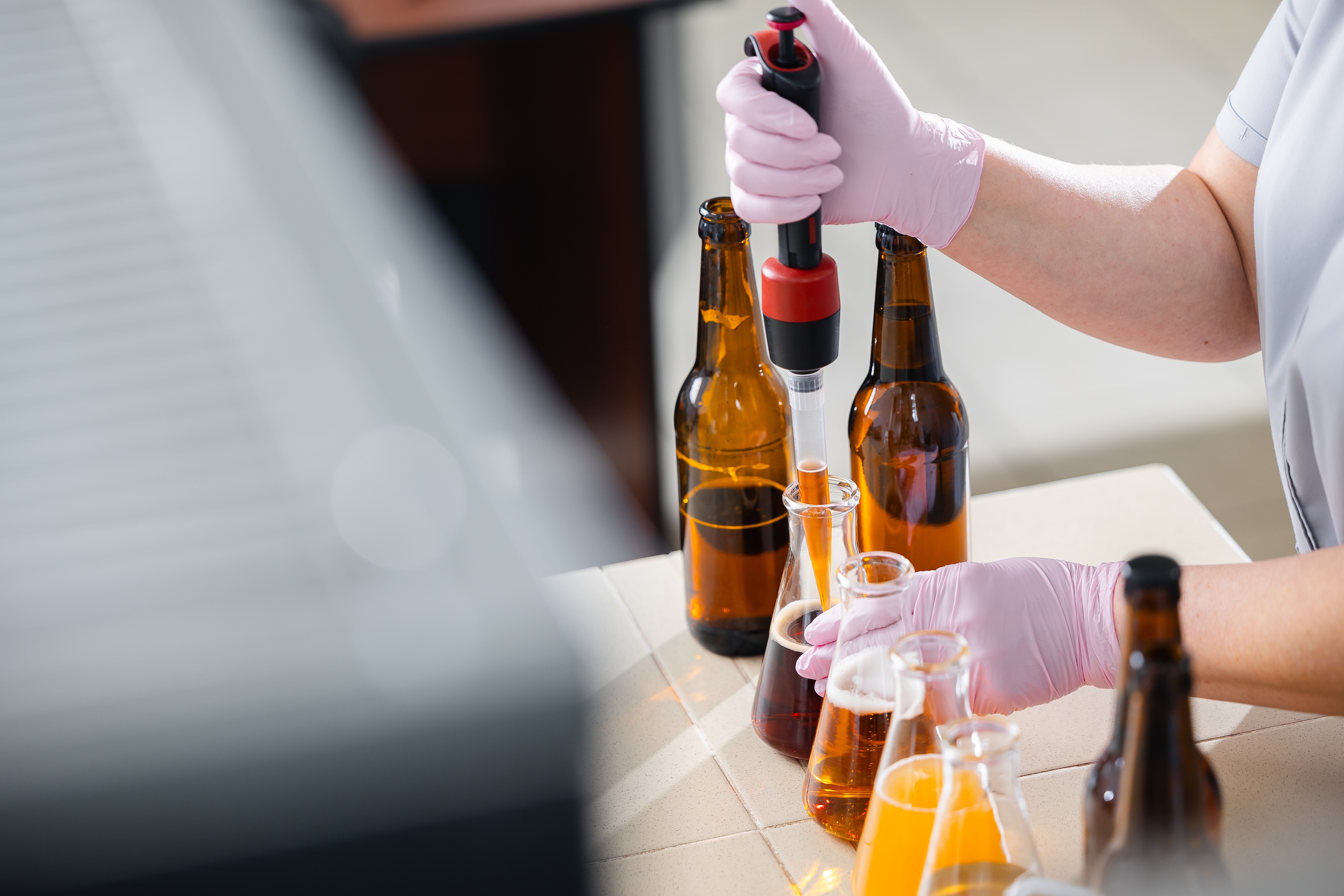
- Laboratory practices and applied microbiology.
- Micromalting processes.
- Sensory analysis and technical tastings.
- Gastronomy and consumer experience workshops.
- Innovation and product development activities.
- Seminars taught by professionals and partner companies.
Learning Journeys are an essential part of the master’s in-person experience, connecting learning with the reality of the brewing industry. These experiences may be adapted to the opportunities and needs of each edition and may include technical visits to companies and industry facilities, both in Spain and internationally. Through these technical visits to companies and key facilities—barley and hop fields, malt houses, beer production facilities or specialized suppliers— students will gain exposure to real processes, technologies, production models and industry challenges. These experiences extend learning beyond the classroom and laboratory, supporting a comprehensive understanding of the value chain and bringing students closer to the professional settings where technical, operational and strategic decisions are made.
Ultimately, the in-person experience is designed to put into practice everything learned during the online phase and facilitate direct contact with the reality of the brewing industry.
Master’s Final Project
The Master’s Final Project completes the educational journey.
It will equip you to design, plan and develop innovative projects for producing high-quality beers, integrating the knowledge acquired throughout the program, including new methodologies, technologies and raw materials.
During the online phase, you will work on the conceptualisation and planning of the project, while during the in-person period you will be able to validate hypotheses, conduct trials and develop tests in the pilot plant and laboratory.
Faculty
The Master’s in Brewing Science and Technology is taught by a faculty made up of active professionals and leading specialists in the brewing industry, applied research and business management.
A multidisciplinary faculty that brings together expert profiles in production, microbiology, quality, malting technology, engineering, sustainability, innovation, sensory analysis, industrial management and business leadership.
The combination of faculty from brewing companies, technology centers, universities and industry supplier companies ensures rigorous, up-to-date education that is deeply connected to the reality of the industry.
In addition, the program includes national and international professionals who will share their experience through seminars, masterclasses, workshops and hands-on activities, bringing students closer to the trends, technologies and challenges shaping the future of beer.
Coordination
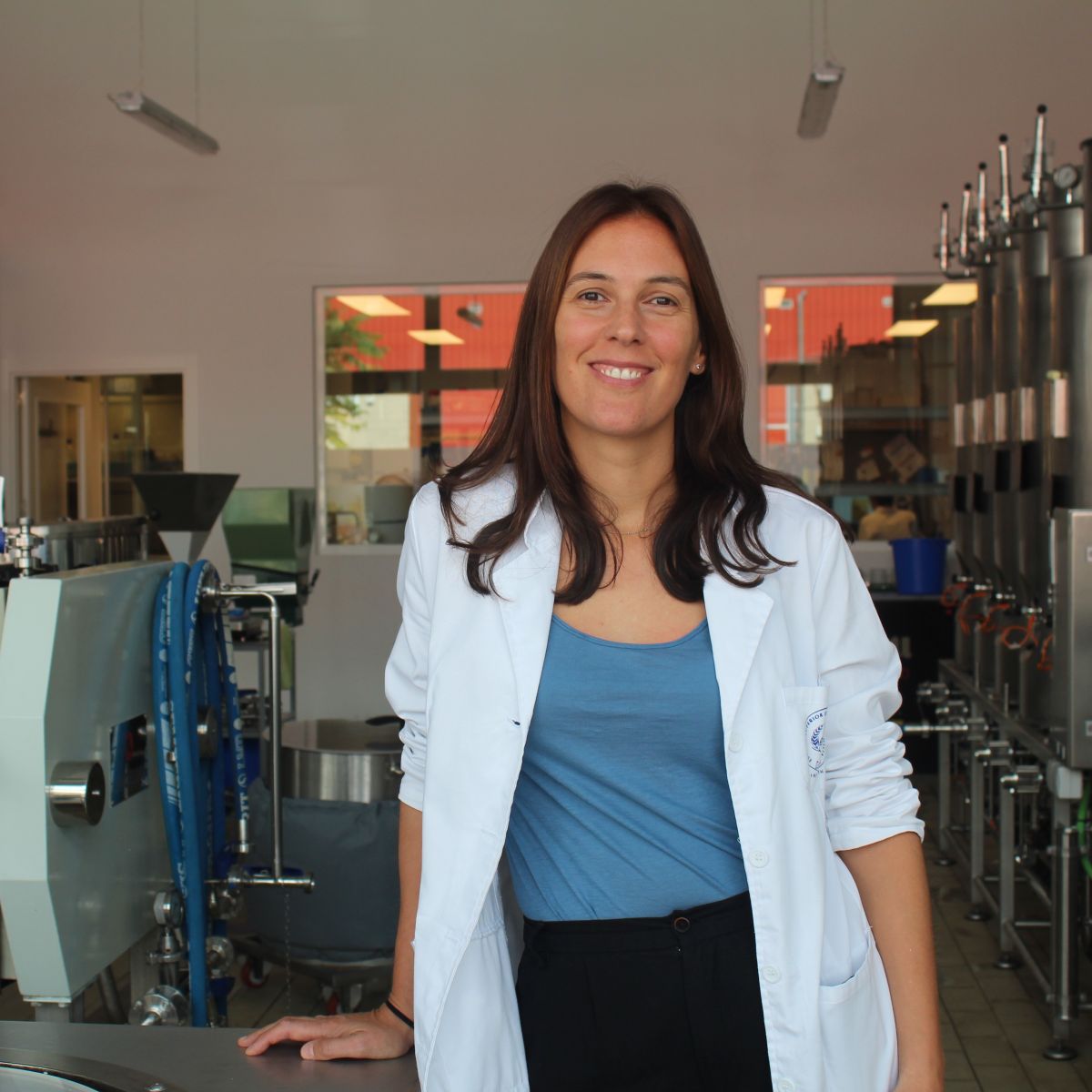
Ana García
Biologist specialized in Food Technology and holder of a Master’s in Brewing Science and Technology. She has more than 20 years of experience in the brewing industry in the areas of quality, R&D and innovation. She has led research and development projects for some of the leading national and international brewing companies and combines her professional work with teaching, the academic coordination of specialized programs in brewing technology, and the technical evaluation of R&D&I projects for tax deductions in the fermented beverage sector.
Faculty and collaborators
Throughout the program, students will be supported by specialized tutors in the different areas of knowledge, who will facilitate learning, resolve questions and guide their academic development during the online phase.
In addition, the master’s includes guest speakers and active professionals from companies, technology centers and leading organizations in the brewing industry, who will share their experience, strategic perspective and knowledge of the latest trends, technologies and innovations transforming the industry.
This combination of academic experts, active professionals and industry leaders allows students to access education connected to business realities and build a high-value network for their professional development.
Learn alongside those transforming the industry
One of the program’s key differentiators is its close connection to the brewing industry.
The involvement of the Spanish Brewers Association and the active participation of professionals from leading companies ensure that the content, methodologies and learning experiences are aligned with the real challenges and needs of the industry.
This close connection provides access to up-to-date knowledge, real-world experiences, networking opportunities and an in-depth understanding of how the brewing industry is evolving today.
Admission process
Basque Culinary Center’s admissions system has two goals:
- To ensure that you have the academic level and personal skills needed to successfully complete an innovative and demanding curriculum.
- To confirm that the master’s meets your educational needs and interests.
1. Apply
Complete the online application and pay the 150 € fee, which will be refunded if you are not admitted.
2. Share your profile
We would like to learn more about your application: your academic background, professional experience, motivations and educational interests. To do so:
- You will complete a profile questionnaire and submit the required documentation.
- You will complete a practical exercise so we can better understand your knowledge base.
- You will have a personal interview with the master’s coordination team.
3. Assessment of your application
After the interview, we will review your application and notify you of the outcome within approximately two weeks.
4. Reserve your place
If your application is accepted, you can secure your place by making the payment of 25% of the master’s tuition, within the established deadline.
Entry qualifications
Direct admission
Students with prior education in the following university bachelor’s degrees are eligible for direct admission.
- Bachelor’s Degree in Food Science and Technology / Bachelor’s Degree in Food Engineering
- Bachelor’s Degree in Biology / Bachelor’s Degree in Biotechnology
- Bachelor’s Degree in Agronomy / Bachelor’s Degree in Agricultural Engineering
- Bachelor’s Degree in Pharmacy
- Bachelor’s Degree in Environmental Sciences
- Bachelor’s Degree in Enology
- Bachelor’s Degree in Agricultural Sciences and Bioeconomy
- Bachelor’s Degree in Agroenvironmental Engineering
- Bachelor’s Degree in Human Nutrition and Dietetics
- Bachelor’s Degree in Microbiology
- Bachelor’s Degree in Medicine
- Bachelor’s Degree in Basic and Experimental Biomedicine
- Bachelor’s Degree in Dentistry
- Bachelor’s Degree in Optics and Optometry
- Bachelor’s Degree in Podiatry
- Bachelor’s Degree in Biomedical Sciences
- Bachelor’s Degree in Nanoscience and Nanotechnology
- Bachelor’s Degree in Gastronomic Sciences
Admission with additional training: Bridging credits
Before the master’s begins, students with the following qualifications will complete online bridging training in Biochemistry and Microbiology to standardise their knowledge and ensure a common foundation. It will be delivered through a self-directed learning format, with personalised support and automated assessment to ensure competency acquisition.
These credits are not included in the master’s tuition. Please note that each ECTS credit has an additional cost of 190 €.
Science, Industrial Technologies and Health Sciences
You must complete General Microbiology (2 ECTS).
- Bachelor’s Degree in Chemistry / Bachelor’s Degree in Chemical Engineering
- Bachelor’s Degree in Bioinformatics
- Bachelor’s Degree in Biochemistry
- Bachelor’s Degree in Biomedical Engineering
- Bachelor’s Degree in Physical Therapy
- Bachelor’s Degree in Health Engineering
- Bachelor’s Degree in Nursing
Agroforestry and Environmental Technologies
You must complete Fundamentals of Biochemistry (2 ECTS).
- Bachelor’s Degree in Natural Environment Engineering
- Bachelor’s Degree in Agri-Food and Rural Engineering
Engineering and Architecture, Social and Legal Sciences, Sciences, Health Sciences, and Agroforestry and Environmental Technologies
You must complete General Microbiology (2 ECTS) and Fundamentals of Biochemistry (2 ECTS).
- Bachelor’s Degree in Industrial Engineering
- Bachelor’s Degree in Business Administration / Bachelor’s Degree in Economics
- Bachelor’s Degree in Telecommunications Engineering
- Bachelor’s Degree in Law
- Bachelor’s Degree in Marketing
- Bachelor’s Degree in Geology
- Bachelor’s Degree in Psychology
- Bachelor’s Degree in Physical Sciences
- Bachelor’s Degree in Environmental Technology Engineering
- Bachelor’s Degree in Environmental Engineering
- Bachelor’s Degree in Physical Activity and Sport Sciences
- Bachelor’s Degree in Gastronomy and Culinary Arts
- Bachelor’s Degree in Marine Sciences and Technologies
- Other cases: Students with qualifications outside these categories will be assessed individually to determine their eligibility and whether they require additional training.
- International students: Qualifications from the European Higher Education Area (EHEA) and international education systems outside the EHEA are accepted, subject to an assessment of their academic equivalence.
- Students pending completion of their bachelor’s degree: Applicants who only have their Bachelor’s Final Project and up to 9 ECTS credits outstanding may be admitted, provided they meet all other admissions requirements.
Master’s qualification
This educational program is a Lifelong Learning Master’s. To obtain this qualification, you must hold a university bachelor’s degree (Licenciatura, Engineering Degree, Diploma or equivalent).
- If you do not hold a university degree, you may apply for a recognition of competencies process, which evaluates your professional experience and career path. This process must be completed during the admissions process, before your application is resolved.
- Once you have successfully completed this process and the educational program, you will receive the Lifelong Learning Master’s Degree.
- If you do not pass the recognition of competencies process, you will receive the University Extension Diploma in Brewing Science and Technology.
For questions and further information: cursos@bculinary.com.
Fees and payment
Total master’s fee: 15.950 €
Payment method:
- 150 € upon application (fully refundable if you are not admitted).
- 25% of the total, 3.950 €, upon confirmation of admission as a place reservation.
- The remaining amount, in 3 installments of 3.950 €, payable in September and November 2027 and January 2028.
*The in-person part of this master’s is partially eligible for FUNDAE funding for employees in Spain.
Would you like to invest in your professional future but need support to do so? We have financing options to facilitate access to our training programs. If you would like more information, complete the following form.
The master’s fee includes:
- Access to the pilot plant and professional equipment.
- Raw materials and consumables for practical sessions.
- Uniform for in-person activities.
- Learning Journeys and technical visits.
- Three-day international trip.
- Access to the digital platform and training resources.
- Personalised academic support.
- Membership of the Basque Culinary Center alumni community: BCC Alumni.
Cancellation Policy
Basque Culinary Center reserves the right to cancel the program if the minimum number of students is not reached or for organizational, academic or force majeure reasons, providing at least 20 days’ prior notice. In such a case, a full refund of the amounts paid will be issued, without liability for additional expenses (travel, accommodation, visas or others). Optionally, relocation to another edition or an equivalent program may be offered.
As a member of the BCC Alumni community, you have access to exclusive discounts on our programs and training activities. Below are the benefits available depending on the training you have previously completed:
I AM A BACHELOR’S OR MASTER’S ALUMNI
- 10% discount on Master’s programs
- 10% discount on Specialization Courses
- 10% discount on Intensive Courses, workshops, seminars and master classes
- 10% discount on WSET Courses (Levels 1, 2 and 3)
I AM A SPECIALIZATION COURSE ALUMNI
- 5% discount on Master’s programs
- 5% discount on Specialization Courses
- 10% discount on Intensive Courses, workshops, seminars and master classes
- 10% discount on WSET Courses (Levels 1, 2 and 3)
To benefit from the discount, if you want to take a master’s or specialization course (either online or on-site) you must complete the registration process as usual. The discount percentage will be applied to the last installment of the course and you will be notified at that time. After registering, you can let us know that you are Alumni by emailing alumni@bculinary.com. If you register with your @alumni account, this last step is not necessary. If the tuition fee is paid in a single payment, please contact alumni@bculinary.com before registering to request the discount code you need to enter during the registration process.
If a visa is required due to nationality, a type C (Schengen) visa must be requested to enter Spain.
International students must travel with the official documentation accrediting their enrollment on the course and proof of the health insurance that will cover them during their stay in Spain.
SCHOLARSHIPS AND FINANCIAL AID FOR MASTER’S PROGRAMS
Due to the official nature of the degree, students legally residing in Spain may apply for public scholarship or aid programs. International students can also seek funding and scholarships from institutions in their home countries that support studying abroad.
ERASMUS+ SCHOLARSHIPS
Students may apply for international mobility aid to complete internships in Europe under the Erasmus+ program.
EMPLOYABILITY SUPPORT FOR STUDENTS
To support students in finding employment during or after their studies, students on this Master’s will receive information on job offers received by the faculty.
During their stay they may also apply for the study-work scholarships offered by the Faculty and provide services in different departments: R&D, operations, cafeteria, etc.

Discover EDA Drinks & Wine Campus
EDA Drinks & Wine Campus is an initiative led by Basque Culinary Center to develop internationally recognized university education, research and innovation in the world of beverages.
You will become part of an ecosystem that fosters sustainable economic and social development through wine and beverages by attracting talent, offering specialized education, promoting entrepreneurship and innovation, and developing research lines with an international outlook, an integrated perspective and a commitment to excellence.
Facilities
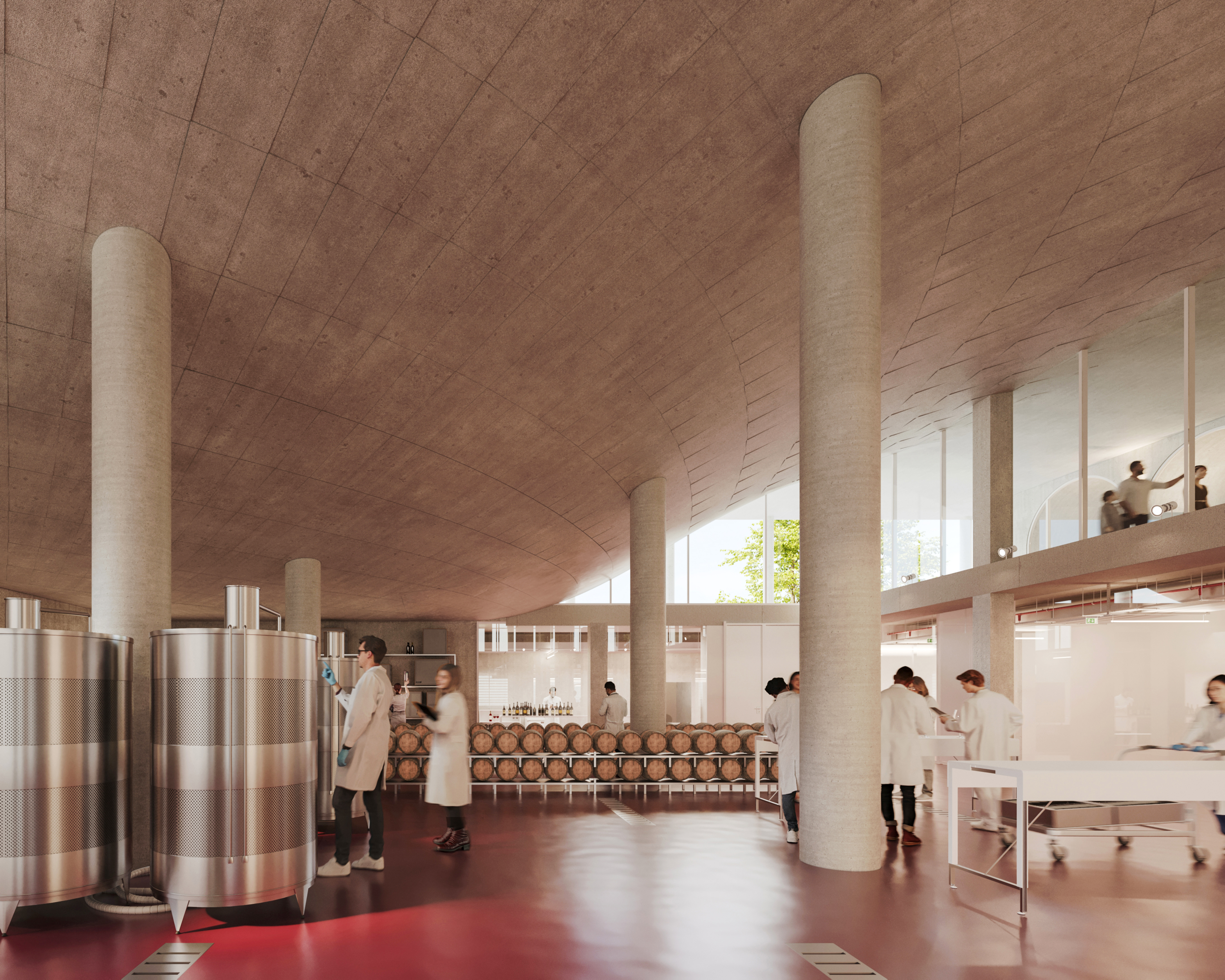
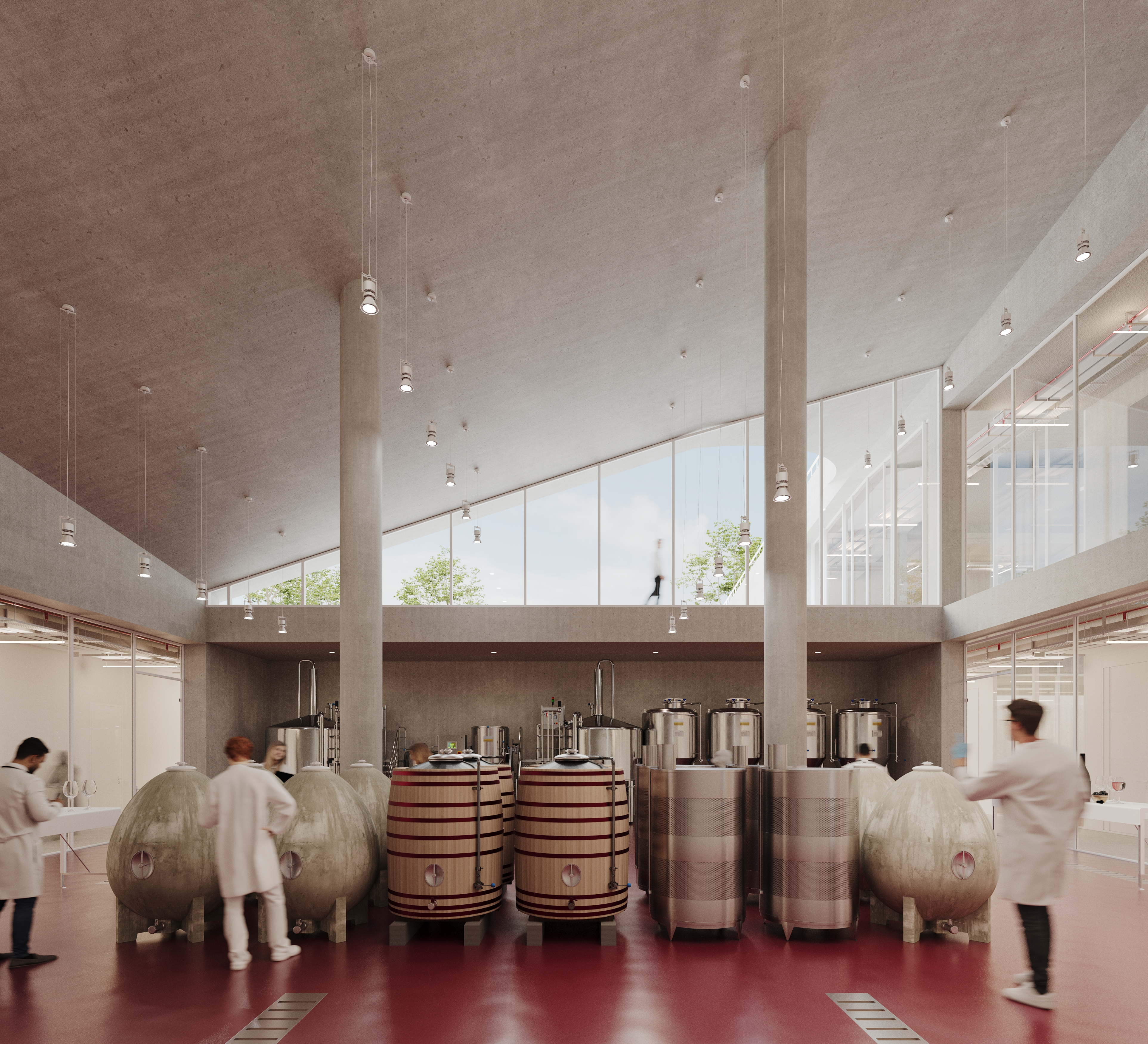
EDA Drinks & Wine Campus is structured around two independent and complementary sites in Álava: one in Vitoria-Gasteiz, dedicated to the world of beverages, and another in Laguardia, Rioja Alavesa, specialising in wine and its connection to the land. Conceived as a single campus distributed across two locations, both sites combine education, research, innovation and connection with their surroundings.
This site covers approximately 4.000 m² and is dedicated to the development of fermented beverages, beer, cider, spirits and other products.
It includes:
- Pilot plant
- Production and innovation spaces
- Laboratories
- Sensory rooms
- Drinks bar as a hands-on training space.
A setting designed to experiment, prototype and work with real production processes.